-

-

When people in Kuwait and in the Gulf Region think about doing business in India, the first images that may come to mind are a vast and growing consumer market, Indian professionals working across the Gulf, major infrastructure projects, pharmaceuticals, automobiles, textiles and technology.
Beyond these, another India is emerging, less visible to the casual visitor and increasingly important to global business. Across Bengaluru, Hyderabad, Mumbai, Chennai, Pune, Delhi-NCR and a growing number of smaller Indian cities, teams of Indian engineers, scientists, accountants, designers, software developers and business professionals are working every day on products and services used around the world.
These are India’s Global Capability Centers, or GCCs, which could become an important new bridge between India and Kuwait and the Gulf Region. A GCC is no longer simply a low-cost back office. The best centers today work on artificial intelligence, cybersecurity, financial analytics, semiconductor technology, engineering, product design, digital platforms, research and global business strategy. India has more than 1,700 such centers, employing almost 2 million professionals.
For Kuwaiti or Gulf companies looking to become more international, this offers an interesting proposition: India can become the place where they build the capabilities needed for their next stage of growth.
The mega-cities and beyond
India’s strength lies partly in the extraordinary variety of its cities. Bengaluru is perhaps the best-known example. It has become a global center for software, AI, engineering and deep technology. Hyderabad has developed strong capabilities in technology, pharmaceuticals, healthcare and aerospace. Mumbai is India’s financial capital and naturally suited to banking, investment, insurance and financial analytics.
Pune brings together engineering, manufacturing, automobiles and technology. Chennai has deep expertise in automobiles, electronics, industrial engineering and digital services. Delhi-NCR combines technology and professional services with proximity to India’s government and regulatory institutions.
And then there is the next layer of India. Cities such as Ahmedabad, Jaipur, Kochi, Thiruvananthapuram, Coimbatore, Kolkata, and Indore are increasingly attracting technology and business operations. For a company, this means that India is not one talent market but many, each with different skills, costs, cultures, and areas of expertise.
This is particularly useful for a Kuwaiti or a Gulf company. It could, for instance, have financial analytics in Mumbai, engineering in Pune, technology in Bengaluru, and specialised operations in Ahmedabad, Kochi, or Jaipur.
Close familiarity between Kuwait/Gulf and India
Kuwaiti traders and businesses have been investing and operating in India for centuries. Companies such as Alghanim Industries, Alshaya Group, Asiya Investments and Agility Logistics have established a presence in the Indian economy. Alghanim Industries’ Kirby India, for example, has manufacturing facilities in Hyderabad, Haridwar and Halol.
There are examples also from the wider Gulf Region. UAE-based DAMAC Group established a shared services and capability center in Noida, supporting functions such as finance, human resources, sales operations, commercial activities and digital initiatives. It is developing another center in Pune.
What is changing in India is the nature of the opportunity. A Kuwaiti company operating in India traditionally needed factories, shops, hotels, warehouses or investment assets. Today, it can also build a team that works for the company globally.
The significance of such a move goes beyond the number of employees in the center. It represents a change in thinking: India is now not merely a market, but an attractive place from which to run and grow an international business.
What India offers that is difficult to replicate
Perhaps India’s greatest advantage is its people. Every year, millions of young Indians enter the workforce. Among them are engineers, scientists, doctors, finance professionals, software developers, designers, and management graduates. Many have studied or worked internationally and are comfortable operating across cultures and time zones.
But numbers alone do not explain India’s attraction. Over several decades, India has developed an ecosystem around this talented workforce, investing in universities, technology companies, start-ups, professional services firms, research institutions, tech parks, and increasingly sophisticated digital infrastructure.
This makes it possible for a company to start small and grow quickly. As an example, a Kuwaiti business might begin with 50 specialists in India. With expansion in international operations, that team can grow from 500 to 5,000. It can move from accounting and customer support to data science, product development, engineering, and research. The Alshaya Group’s GCC in Bengaluru is an excellent example. That journey, from support function to strategic capability, is one of the defining features of India’s GCC story.
A natural fit for Kuwaiti companies
Kuwaiti companies have strong expertise in sectors such as energy, banking, investment, logistics, retail, real estate, and hospitality. India offers complementary strengths in technology, engineering, analytics, pharmaceuticals, digital services, and a large pool of skilled professionals.
Imagine a Kuwaiti bank using India for cybersecurity, digital services, and AI. A logistics company developing its global digital platform from Bengaluru. An energy company using Indian engineers and data scientists to improve operational efficiency. A Kuwaiti investment company building a research and analytics team in Mumbai or GIFT City. These are not distant possibilities. The building blocks already exist.
There is also an important financial connection emerging through GIFT City in Gujarat, India’s international financial center, which is developing capabilities in international banking, capital markets, insurance and financial technology. India and Kuwait have already established institutional cooperation between Kuwait’s Capital Markets Authority and India’s International Financial Services Centers Authority in April 2024.
A relationship entering its next chapter
India and Kuwait have a relationship that is much older than today’s business statistics, built through trade, seafaring, pearls, dates, textiles and, above all, people. Generations of Indians have lived and worked in Kuwait, while Kuwaiti businesses have developed relationships in India.
The next chapter of that relationship can be built around something new: knowledge and capability. For Kuwait, establishing a GCC in India need not mean moving jobs away from Kuwait. It can mean creating an additional arm of a Kuwaiti enterprise, one that draws on India’s talent while supporting the company’s operations in Kuwait and other international markets.
And for India, Gulf investment brings something equally valuable: international capital, entrepreneurial experience and access to markets where Indian talent and technology can create new value. The most interesting question, therefore, is not whether India can provide skilled people at competitive cost. That question has largely been answered.
The more important question is: What could a Kuwaiti company build in India that it could not build as easily anywhere else? The answer could range from a technology center to a global research team, from an investment-analytics platform to an engineering hub.
India’s GCC story is ultimately a story about people. It is about talented young Indians working on global challenges, and about international companies discovering that the capabilities they need for tomorrow can be built in Indian cities today.
For Kuwait and the wider Gulf, that makes India more than an investment destination. It makes India a potential partner in building the future.
****************************************************
India’s Growth and Its Journey Towards 80 years of Independence!
India's Space Sector: A Launchpad for Global Partnerships
|
 By Gurjit Singh, By Gurjit Singh,
Former Ambassador and author
|
G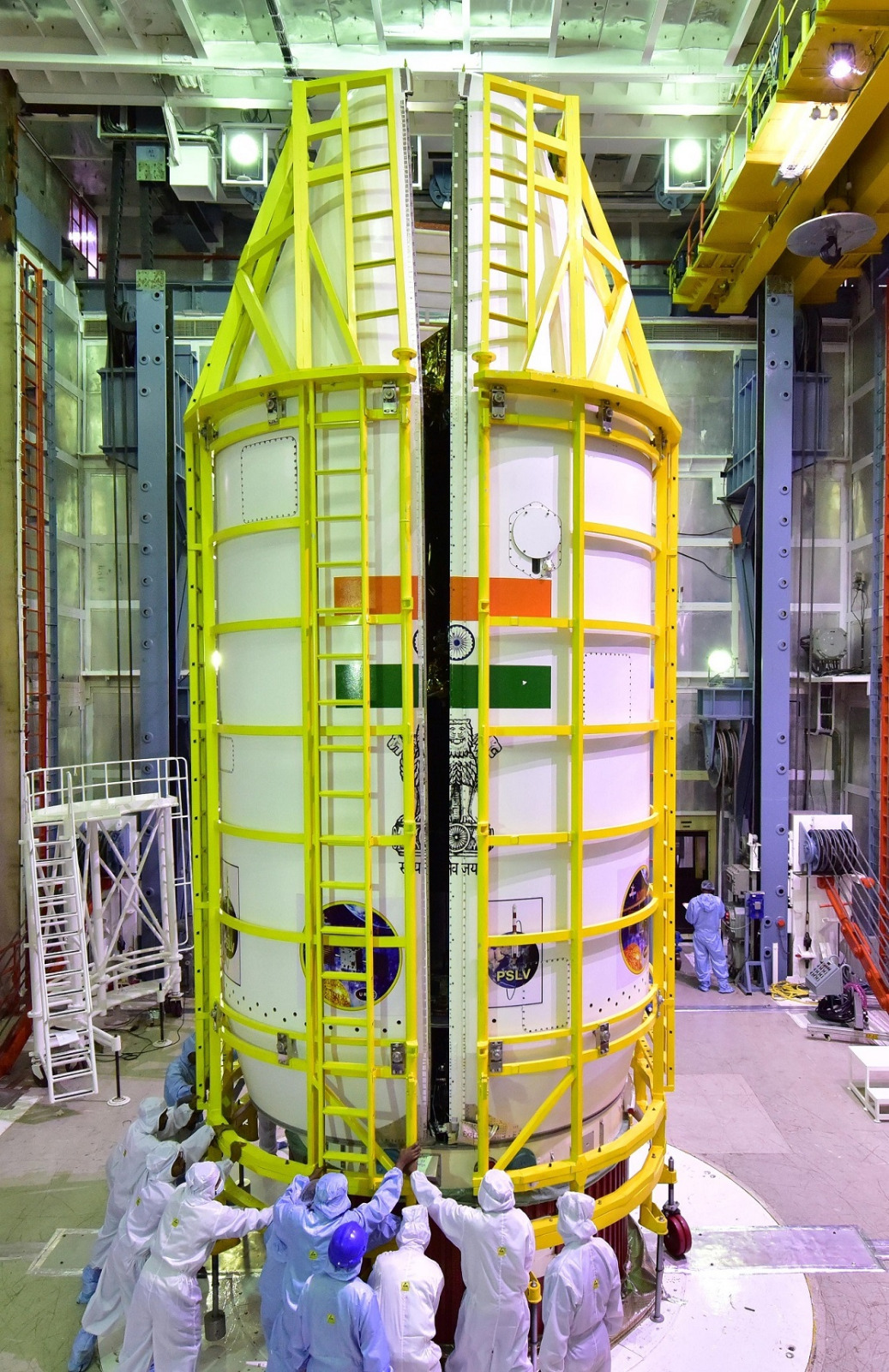 rowing competition in outer space provides India with a unique opportunity to shape a narrative in which collaboration, rather than confrontation, drives space exploration. Recognised as a trustworthy and cost-effective spacefaring nation, India is now well placed to transform its technological advances into enduring international partnerships that contribute to scientific progress, economic growth, and sustainable development.
India's journey into space has been distinctive. Unlike many space programmes that emerged from Cold War rivalries, India's programme was conceived as an instrument of national development. Dr. Vikram Sarabhai anchored India's space vision in practical applications that would improve the lives of ordinary people. Under his leadership, satellites were developed to strengthen communications, weather forecasting, disaster management, healthcare, agriculture and education. This development-oriented philosophy remains central to India's space programme and resonates strongly with the needs of countries in the Global South, which seek practical applications of space technology rather than prestige alone.
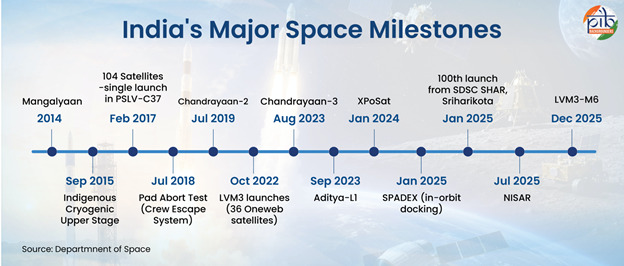
Today, India's achievements extend beyond developmental applications. The Chandrayaan missions, the Mars Orbiter Mission, the Aditya-L1 solar observatory, and the forthcoming Gaganyaan human spaceflight programme have established India as a nation capable of executing sophisticated and reliable space missions. Chandrayaan-3's successful soft landing near the Moon's south pole placed India among an exclusive group of space powers while demonstrating that world-class innovation can be achieved at comparatively modest cost.
India's growing credibility comes at a time when the global space economy is expanding rapidly. Valued at over US$600 billion today and projected to approach US$1.8 trillion by 2035, the sector is increasingly driven by commercial activity in satellite communications, Earth observation, navigation, climate services, broadband connectivity, and emerging fields such as in-orbit servicing and lunar exploration. Many countries aspire to participate but lack indigenous capabilities. They seek dependable long-term partners rather than merely launch providers.
India possesses the capabilities to meet these requirements. The liberalisation of the space sector in 2020 transformed the ecosystem by opening it to private participation. The establishment of the Indian National Space Promotion and Authorisation Centre (IN-SPACe), the expanding commercial role of NewSpace India Limited, and the growth of private enterprises have created one of the world's most dynamic emerging space ecosystems. Indian startups are developing launch vehicles, satellite platforms, geospatial applications and propulsion technologies that are attracting global investment and customers. Companies such as Skyroot Aerospace, Pixxel and Agnikul Cosmos have demonstrated that Indian private enterprise can compete internationally in advanced space technologies.
The next step is to internationalise this ecosystem.
Rather than positioning itself only as a low-cost launch destination, India will offer comprehensive partnerships encompassing satellite design, launch services, mission operations, ground stations, astronaut training, capacity building and downstream applications in agriculture, disaster management and maritime security. Such integrated partnerships would be valuable for countries across the Global South and the Indo-Pacific seeking affordable, customised and reliable technologies to meet their development priorities.
India has demonstrated the diplomatic value of such cooperation. Through the South Asia Satellite, it provided communication and developmental benefits to neighbouring countries. Indian launch vehicles have successfully placed hundreds of foreign satellites into orbit for governments, universities and commercial operators around the world. India's decision to join the Artemis Accords reflects its willingness to participate in the peaceful exploration of the Moon through international collaboration. Cooperation with NASA, the European Space Agency and JAXA has strengthened India's scientific and technological capabilities.
These partnerships reinforce India's standing as a leading voice of the Global South. India offers development partnerships based on affordability, reliability and mutual respect rather than creating technological dependence. Space cooperation has therefore become an increasingly important instrument of Indian diplomacy, strengthening bilateral relationships while delivering tangible developmental benefits.
To realise its full potential, India will aim to sustain the momentum of reform. Faster regulatory approvals, greater access to venture capital, stronger intellectual property protection, and closer collaboration among research institutions, industry and academia will be essential. Public procurement policies would continue supporting Indian startups, enabling them to scale up, innovate and integrate into global supply chains.
India is positioned to play a larger role in shaping the governance of outer space. Orbital congestion, space debris, responsible resource utilisation and equitable access to emerging space opportunities are becoming pressing international concerns. As space activities expand, there will be an increasing need for countries capable of building consensus on responsible norms and practices. India's long-standing commitment to the peaceful uses of outer space, combined with its growing technological capabilities, equips it to contribute meaningfully to the development of rules that promote transparency, sustainability and equitable access.
The coming decade will determine not only which countries lead in space but also how space is governed. With its scientific capabilities, entrepreneurial ecosystem and international credibility, India is uniquely placed to bridge the gap between established and emerging space nations. By building collaborative partnerships founded on inclusivity, mutual benefit and innovation, India can transform its space programme into a major pillar of its global engagement.
In an increasingly divided world, India's space sector offers a powerful reminder that the greatest achievements in space are those that bring nations together. That may well become India's most enduring contribution to humanity's next frontier.
________________________________________________________________________________________________
India: The Trusted First Responder
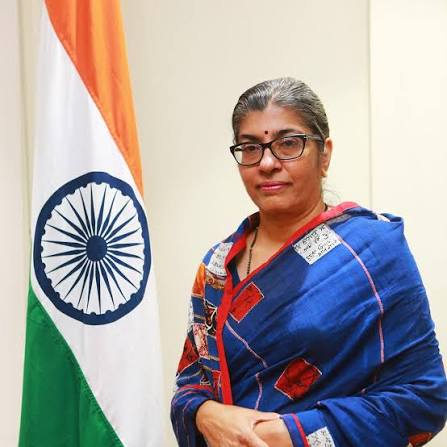
Ambassador Suchitra Durai
[Former Ambassador of India to Thailand and Former High Commissioner of India to Kenya]
When a giant wave of sea-water struck Chennai’s Marina Beach on the morning of 26 December 2004, pulling in its wake fisherfolk and a group of children playing cricket, little did their brethren know that an entire region had been struck and that, across the Bay of Bengal, local people and foreign tourists on Thai and Indonesian beaches had also been swept away.
The Indian Ocean Tsunami of December 2004 was a natural catastrophe of a magnitude not experienced by humanity in recent times. It resulted in the death of almost a quarter million people and displacement of a couple of million people in 14 countries of the Indo-Pacific.
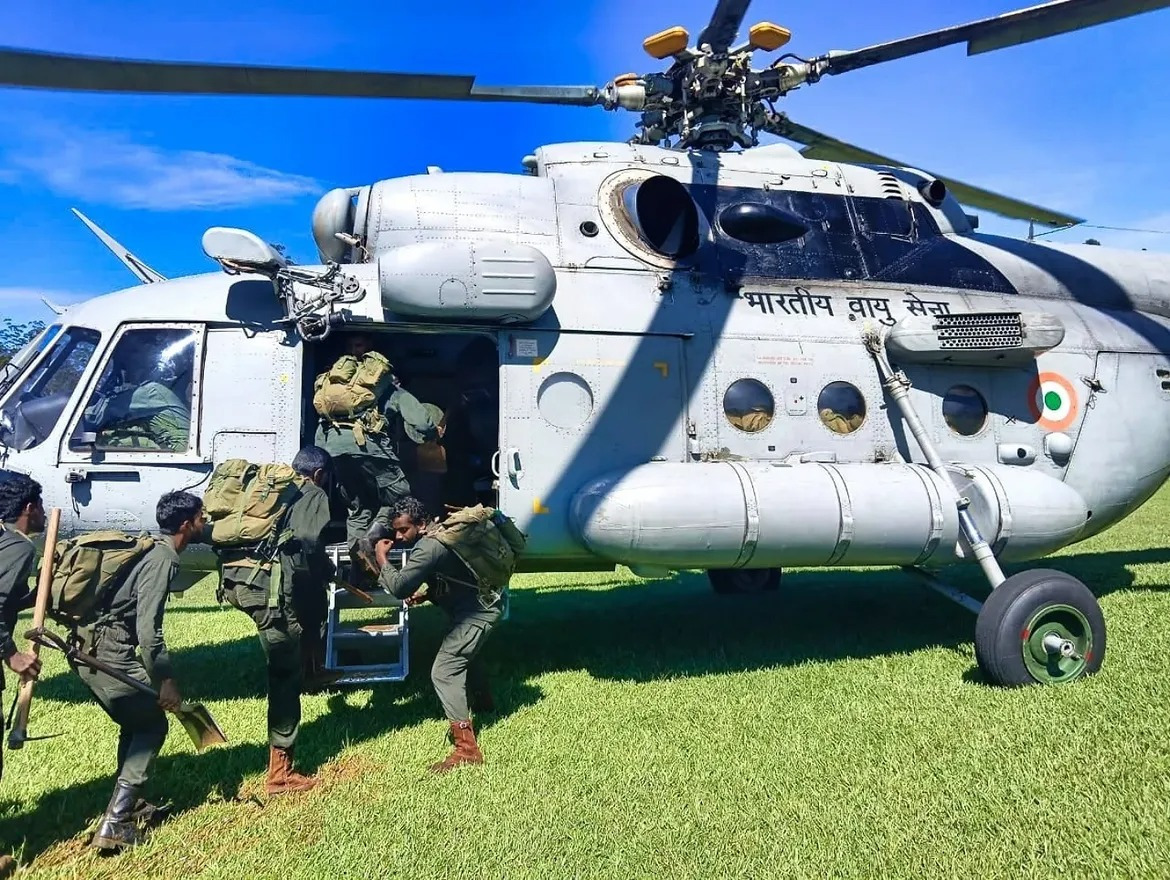 It also marked the coming of age of India’s HADR (Humanitarian Assistance and Disaster Relief) institutional capacity. India not only dealt with death and destruction in its mainland, particularly in the coastal states of Andhra Pradesh and Tamil Nadu as well as major devastation in its island territories of Andaman & Nicobar (A&N) islands but also provided speedy assistance to countries in south and south-east Asia including Sri Lanka, Maldives, Thailand and Indonesia. Simultaneously, India launched five HADR operations, two national and three international – Operation Madad (coastal south India), Operation Sea waves (A&N), Operation Castor (Maldives), Operation Rainbow (Sri Lanka) and Operation Gambhir (Indonesia). These involved the three defence services and the Indian coast guard – more than 40 ships, several transport aircraft and helicopters as well as more than 20,000 military personnel were deployed.
India’s actions led to its recognition as a credible first responder in the Indo-Pacific region. Soon thereafter, the Disaster Management Act of 2005 was adopted by the Indian parliament providing the legal and institutional framework for disaster preparedness, mitigation and response, a three-layered structure at the national, state and district level and the establishment of a dedicated force, the National Disaster Response Force (NDRF) to respond to such calamities.
The 2004 Tsunami also saw the coming together of the navies of four countries – Australia, India, Japan and the US – to coordinate the delivery of assistance in a collaborative effort that eventually evolved into the Quad.
India has handled several major natural disasters in the last few decades both in its immediate neighbourhood as well in distant lands.
In December 2014, India undertook one of its most complex humanitarian missions, Operation Neer, to supply drinking water to the Maldives after that country’s only desalination plant broke down. Indian Air Force aircraft and Indian naval ships worked round the clock to supply more than 1,500 tonnes of drinking water to the Maldives becoming the first country to respond to the request from the Maldives.
In April 2015, when a massive earthquake hit Nepal, India launched a comprehensive rescue and relief mission in the form of Operation Maitri within six hours of the initial tremors. Several thousand stranded Indians and foreign nationals were evacuated by air and land routes and hundreds of tons of essential material were delivered. Several field hospitals were set up. After the relief operations were completed, India launched a major rehabilitation and reconstruction package of around USD 2 billion for Nepal.
Following a devastating earthquake that struck Myanmar in end March 2025, India launched Operation Brahma, a huge tri-services combined with NDRF mission that supplied over 750 MT of materials and equipment including essential medicines and food aid. Field hospitals were set up in Mandalay, while engineering teams were deployed for reconnaissance and assessment of structural damage. Op Brahma was a classic whole-of-government HADR endeavour by the Government of India.
In end 2025, India provided massive support under Operation Sagar Bandhu to Sri Lanka that was hit by cyclone Ditwah. Food, equipment, medicines and other essential items were provided and more than 1000 tons of dry rations were supplied.
Beyond its immediate neighbourhood, India also responded with alacrity to requests from Turkiye and Syria when they were struck by earthquakes in 2023. Under Operation Dost, India was a first responder sending large Search and Rescue (SAR) teams of more than 250 personnel along with medical teams and dog squads to both countries as well as materials support.
In March 2019, India provided HADR to cyclone-hit Mozambique and in 2023 provided assistance to Malawi which was affected by a tropical cyclone.
Recently, on 26 June, 2026 India undertook its most ambitious HADR initiative when 30 tons of humanitarian relief materials accompanied by a 41-member team comprising experienced rescue personnel and medical professionals arrived in two C-17s to earthquake hit Venezuela.
During the Covid-19 pandemic, India supplied 300 million doses of vaccine to 99 countries and 2 United Nations entities under the Vaccine Maitri initiatives since January 2021, along with essential medicines and medical support.
For India, HADR has moved from being an episodic activity to a continuous global engagement. It is an essential feature of India’s foreign and security policy that was formally enunciated in the Security and Growth for All in the Region (SAGAR) doctrine announced by Prime Minister Modi during a visit to Mauritius in March 2015 which underpins India’s approach to the Indian Ocean Region; it became an intrinsic part of our Indo-Pacific Vision and Indo-Pacific Oceans Initiative (IPOI) announced in 2019 and evolved into the MAHASAGAR vision outlined by PM Modi in March 2025.
India’s approach is not merely reactive. It has also put in place frameworks for international cooperation in the area of prevention and mitigation through contributing towards the setting up of an international tsunami warning system as well as the launch of the Coalition for Disaster Resilient Infrastructure (CDRI). The CDRI (comprising 60 member states) works with 25 small island developing states to build disaster resilient infrastructure including schools, hospitals and homes.
By providing need-based and rapid assistance during emergencies and through its efforts to develop capacities for mutual benefit, India is seen as a reliable first responder and a force for global good.
______________________________________________________________________________________________
VIKSIT BHARAT 2047: A ROADMAP TO BECOME A DEVELOPED NATION
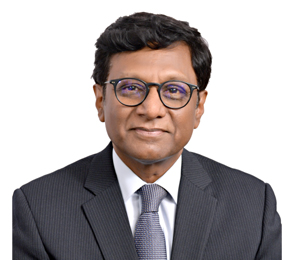
Ambassador (Dr.) Mohan Kumar
[Former Indian Ambassador to France and currently Dean/Professor at O.P. Jindal Global University]
It is creditable that the Government of India has set for itself and the nation a crucial goal: That India should become Viksit Bharat by 2047, which would be the one hundredth year anniversary of India’s independence. While there is general agreement that the term Viksit Bharat denotes a developed country, it is still necessary for public policy purposes to break the concept down to know what it entails. What follows is an attempt to do so.
A 10 trillion-dollar economy: While India can be legitimately proud of being the fourth largest economy in terms of Gross Domestic Product (GDP) in the world, the fact remains that for a population that is approaching 1.5 billion, the present GDP of $4.5 trillion is a little below par. So, if India must become “Viksit” in the real sense of the term, the GDP must grow significantly to attain the figure of at least 10 trillion dollars. This is entirely achievable if we can do a couple of things. First, 40 per cent of our GDP is foreign trade, so our share of international trade must simply double. In particular, our share of global exports, which hovers around 2 per cent, should rise to 10 per cent. Second, our Foreign Direct Investment (FDI), which for the latest year is a little short of $ 100 billion, must also grow manifold. In order for the above two things to happen, Government of India must carry out deep seated economic reforms in areas such as land, labour, power, agriculture, infrastructure and regulatory obstacles.
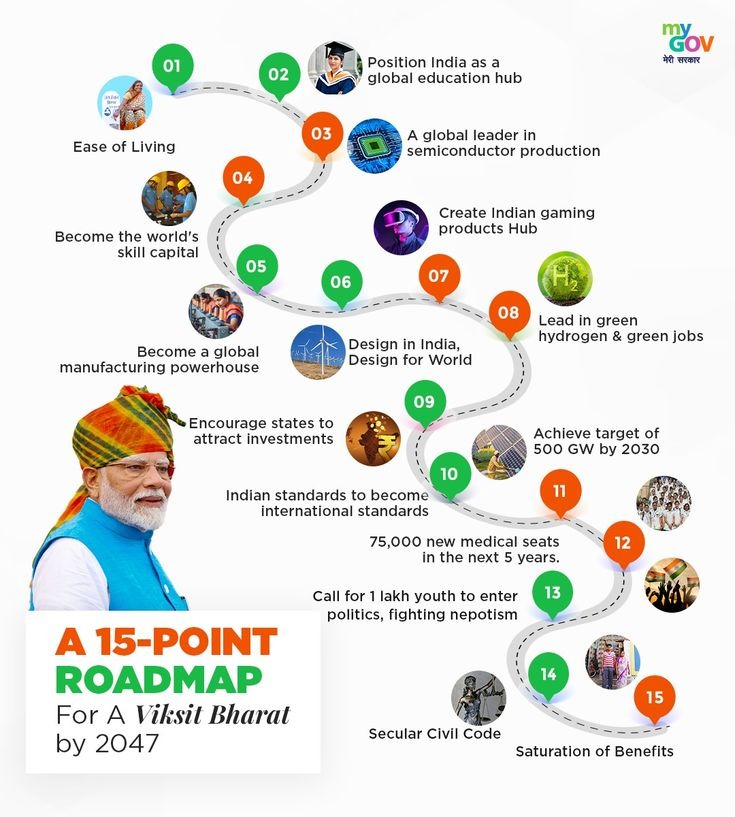
Inclusive Economic Growth: While there is no question that the GDP must accelerate, as mentioned above, that alone is not enough. Growth must be inclusive which is to say that it must percolate to the downtrodden people who are at the bottom of the pyramid. The government has conceived excellent schemes such as the Pradhan Mantri Garib Kalyan Yojana. But going beyond that, job creation for the youth must become a national mantra for both the Central and State Governments. Since it is not possible for the Government alone or even the organized sector to provide all the jobs that are necessary, it is vitally important to enable an ecosystem where the youth become entrepreneurs and job creators rather than be mere job seekers. Present levels of economic inequality are unsustainable and efforts must be made to make the society much more egalitarian.
Skilling: It is well recognized that our education system relies heavily on rote learning and it churns out thousands of graduates every year who may not be immediately employable. In this context, skilling and re-skilling of graduates becomes crucial. The idea of vocational training, industry-academic collaboration and imparting tech skills (including Artificial Intelligence) for our graduates must assume mission-mode importance. Spending on education, in both the public and private sector must increase exponentially, especially in states that lag the national average. In parallel, Research and Development must be given prime importance in all relevant institutions. It is indeed true that a population that is close to 1.5 billion can be a demographic dividend for India. But that is true only if the population is skilled enough to face the challenges of a knowledge economy.
Health: India’s healthcare system is undergoing dramatic transformation, driven by digitalization and by infrastructure expansion. But challenges remain on account of rising medical costs and a growing chronic disease burden. Government has undertaken significant efforts such as Ayushman Bharat and Ayushman Arogya Mandir schemes which have made a big impact on providing healthcare in the country. Medical college seats have more than doubled since 2014, in an attempt to bridge the doctor-patient gap. Successful attempts have also been made to promote India as a global hub for medical tourism. Despite all this, serious challenges remain. Public spending on healthcare still lags desired levels. India also runs the risk of becoming the global capital for heart disease and diabetes. India therefore needs to continue its massive transformation of public health infrastructure to make it accessible, affordable and quality-driven for the vast majority of its population. The National Health Mission is doing a commendable job. It simply needs to be strengthened and streamlined.
Sustainable Development: India must not emulate the ways of either the industrialized countries which followed a high-carbon pathway to development or indeed that of China, which even today burns more coal than the rest of the world put together. India is the only major economy today which potentially has the possibility of following a low-carbon pathway to a high-income economy based on sustainable development. And India must do it not just because the world wants it to, but because the people of this country deserve it as a matter of right.
Conclusion: India is indeed well positioned to become Viksit Bharat by 2047. But the country needs to be on mission-mode and a whole-of-government approach is required to make sure that no stone is left unturned in this national endeavour. By any reckoning, the next twenty years will be the most crucial period in India’s history.
Dr Mohan Kumar is a former Indian Ambassador to France and currently Dean/Professor at O.P. Jindal Global University. Views are personal.
__________________________________________________________
-
-
India is not a country you simply visit. It is a country you experience often in ways you did not expect.
You can begin a journey in the shadow of the Himalayas and, days later, find yourself surrounded by coconut palms in Kerala. You can walk through a centuries-old fort in Rajasthan, watch wildlife in a national park, sit quietly in a Himalayan monastery or lose yourself in the colours and sounds of an Indian market.
Few countries can offer such extraordinary variety within a single destination. That is perhaps India’s greatest tourism advantage. It doesn’t offer just one holiday. It offers a lifetime of journeys.
More than monuments
For decades, India’s tourism image was built around a handful of famous attractions the Taj Mahal, the forts and palaces of Rajasthan, the beaches of Goa and the backwaters of Kerala. Those places remain enormously popular. But the India that travellers are discovering today is much bigger than its most photographed landmarks. Increasingly, people are coming to India not simply to see something, but to experience something.
They want to eat where locals eat. They want to stay in a heritage home. They want to learn about traditional crafts, walk through historic neighbourhoods, experience a festival, travel through the countryside or simply spend time with people whose lives may be very different from their own.
India’s tourism story is gradually shifting from seeing places to experiencing them. And that change matters far beyond tourism.The economic power of a visitor. Tourism can sometimes appear to be about hotels, airlines and sightseeing.
In reality, its reach is much wider. Think of a traveller arriving in India. They book a room, take a taxi, eat at a restaurant, buy something from a local shop, hire a guide and perhaps purchase a handmade product to take home. Each of those transactions supports someone. It may be a family running a homestay in Ladakh, a boatman taking visitors through Kerala’s backwaters, a camel guide in Rajasthan, a tea estate worker in Assam or an artisan in Kutch.
Behind every holiday is therefore an entire network of people whose livelihoods are connected to tourism. That is one reason tourism has become such an important economic engine for India. And unlike industries concentrated in major cities, tourism can bring economic activity to smaller towns, villages and remote regions that may have fewer opportunities.
A tourist may see a beautiful destination.
For a local family, that visitor can represent income, opportunity and a reason for the next generation to continue a traditional livelihood. One country, countless journeys. Perhaps the easiest way to understand India’s tourism appeal is simply to look at the range of experiences available.
For adventure seekers, there are Himalayan trekking routes, white-water rivers, paragliding opportunities and the coral-rich waters of the Andaman and Nicobar Islands.
For wildlife lovers, India’s forests offer encounters with Bengal tigers, Asiatic lions, one-horned rhinoceroses, elephants, snow leopards and hundreds of bird species.
For history lovers, the country is almost an open-air archive.
Ancient temples, Mughal monuments, medieval forts, colonial buildings and archaeological sites tell stories spanning more than five thousand years of civilization.
And then there are the quieter experiences the ones that may not make the front page of a travel brochure but often stay with people the longest.
When a holiday becomes something more
Long before wellness became a global travel trend, India had traditions built around the idea of balancing the mind, body and spirit. Today, travellers arrive in Rishikesh for yoga, Kerala for Ayurveda, the Himalayas for meditation and places such as Varanasi, Bodh Gaya and Amritsar in search of spiritual experiences.
For some, it is simply a chance to slow down. For others, it becomes something much deeper. That is an important part of India’s tourism appeal. A journey here does not always end with a photograph. Sometimes it leaves a person thinking differently, feeling refreshed or reconnecting with something they had lost touch with.
That is why wellness tourism has become an increasingly important part of India’s travel economy. You cannot talk about India without talking about food Ask someone about their memories of India and, sooner or later, food will probably enter the conversation.
And Indian food is not one cuisine. It is hundreds of culinary traditions shaped by geography, history, climate and culture. Hyderabad has its biryani. Kerala has its seafood. Gujarat has its distinctive vegetarian traditions. Punjab is known for its robust flavours. Chettinad brings its own intensity, while Delhi and Mumbai offer street food that has become famous far beyond India’s borders. Bengal has its own world of sweets and delicacies.
For an increasing number of travellers, food is no longer something that happens between sightseeing stops. It is the reason for the trip. People are planning journeys around regional cuisine, local markets, cooking classes and traditional food experiences.
And in India, every meal can become a history lesson. When an entire city becomes a celebration. India’s festivals offer another experience that is difficult to replicate elsewhere. During Holi, streets explode with colour. Diwali transforms homes and cities with light.
Durga Puja brings communities together in elaborate celebrations, while Ganesh Chaturthi fills streets with processions and music. Pongal and Baisakhi celebrate harvest traditions, while Rajasthan’s camel fairs and desert festivals bring another side of India’s cultural heritage to life.
These are not performances staged simply for tourists. They are living traditions. Visitors are invited to experience them from within rather than simply observe them from a distance. And that is precisely what modern travellers increasingly want.
The rise of experience tourism
Travel has changed. Many travellers today are less interested in simply ticking famous attractions off a list. They want experiences that feel personal, authentic and memorable. India is well placed for that kind of tourism.
Eco-tourism, rural stays, heritage walks, cycling tours, river cruises, plantation visits, tribal cultural experiences, luxury trains and culinary trails are giving travellers new ways to discover the country.
A restored haveli can become a hotel. A village can become a destination. A family recipe can become a culinary experience. A traditional craft can become something a visitor learns rather than simply buys. When local communities become active participants in tourism, the benefits can go beyond income. They can also help preserve architecture, crafts, traditions and ways of life that might otherwise disappear.
India’s most powerful tourism asset
There is an interesting thing about travelling in India. People often arrive with an itinerary. They leave with stories. They remember the unexpected conversation with a stranger. The meal they had never tasted before. The train journey. The festival they happened to witness. The village they had not planned to visit. The warmth of a family they met along the way.
That is why tourism has become more than an economic sector for India. It has become a form of soft diplomacy. Visitors experience the country directly through its people, food, culture, music and hospitality. And when they return home, they carry those experiences with them.
A speech can tell people about a country. A personal experience can make them remember it. The journey is changing, but the attraction remains. India’s tourism infrastructure is changing rapidly. Modern airports, improved highways, digital travel services, luxury hotels, heritage conservation and better connectivity are making more parts of the country accessible to travellers.
But India’s greatest tourism asset is not an airport, a hotel or even a monument. It is its diversity. Every few hundred kilometres, something changes the language, the food, the landscape, the architecture, the traditions and the stories.
That means no two journeys through India need to be the same. And perhaps that is the secret of India’s enduring appeal. A visitor may come looking for the Taj Mahal, the Himalayas, a beach or a palace. But somewhere along the way, they often discover an India they were never expecting.
And that discovery is what brings many of them back. India doesn’t simply give travellers places to see. It gives them stories to take home.
****************************************************
-
-
Minister of Health, Dr. Ahmed Al-Awadhi, has issued Ministerial Resolution No. 206 of 2026, introducing a revised system of allowances, incentives and career grades for nursing staff and midwives, while creating technically graded joint job titles for the midwifery profession.
The decision aims to enhance the attractiveness of the nursing profession, reward experience and qualifications, and strengthen the healthcare workforce by providing improved financial incentives and a clearer career progression structure.
Under the new resolution, Kuwaiti nurses and midwives will receive monthly allowances totaling 1,110 dinars at the basic professional level. The value of allowances increases with promotions, years of experience and advancement to higher professional grades.
The Head of Nursing Specialist and Head of Midwifery Specialist will receive the highest monthly allowances, totaling 1,510 dinars, comprising work nature allowances, job level bonuses, incentive allowances, cost-of-living support, shift allowances, supervision allowances and training incentives.
A Senior Nursing Specialist or Senior Midwifery Specialist will receive monthly allowances totaling 1,430 dinars, while Nursing Specialists and Midwifery Specialists will receive slightly lower packages based on their professional grade.
Senior nurses and senior midwives will receive total monthly allowances of 1,170 dinars, while nurses and midwives at the standard professional level will receive 1,110 dinars.
Assistant nurses and assistant midwives will receive monthly allowances totaling 1,040 dinars, including work nature, job level, incentive, cost-of-living and on-call allowances.
The resolution also sets out revised allowance structures for non-Kuwaiti nursing staff, including heads of nursing departments, specialists, senior nurses, nurses, assistant nurses and their midwifery counterparts.
Although non-Kuwaiti employees will receive lower financial packages than Kuwaiti nationals, they will continue to benefit from work nature allowances, job level bonuses, cost-of-living allowances, shift or on-call allowances, as well as supervision and training benefits where applicable.
The decision further revises allowances for nursing services technicians, introducing separate scales for Kuwaiti and non-Kuwaiti employees.
Kuwaiti senior nursing services technicians will receive enhanced work nature allowances, incentive bonuses, cost-of-living support and on-call allowances, while nursing services technicians at lower grades will receive corresponding financial benefits.
For non-Kuwaiti nursing services technicians, the revised packages include work nature allowances, job level bonuses, cost-of-living support and on-call allowances according to their professional classification.
A key feature of the resolution is the introduction of a special professional bonus for Kuwaiti university graduates specializing in nursing or midwifery.
Under the scheme, Head Specialists will receive an additional 500 dinars per month, Senior Specialists will receive 400 dinars, Specialists will receive 300 dinars, Senior Nurses and Senior Midwives will receive 200 dinars, while Nurses and Midwives will receive 100 dinars.
The resolution also rewards higher academic qualifications. Kuwaiti nurses holding a doctorate in nursing will receive an additional 150 dinars per month, while those with a master’s degree will receive 75 dinars monthly.
For non-Kuwaiti nursing professionals, doctorate holders will receive an additional 50 dinars, while master’s degree holders will receive 25 dinars per month, provided their qualifications are officially recognized and directly related to the nursing profession.
The Ministry of Health said the revised allowances and career framework are intended to recognize professional expertise, encourage specialization, improve staff retention, and enhance the quality of healthcare services across Kuwait’s medical institutions.
The decision also formally establishes technically graded joint job titles for the midwifery profession, integrating career pathways for nursing and midwifery personnel within the ministry’s human resource framework.
The new remuneration system is expected to provide greater financial stability for nursing professionals while encouraging continuous education, professional development and higher standards of patient care throughout Kuwait’s healthcare sector.
****************************************************