Notice Board

Kuwait will wirelessly link eye screening cameras to speed up the reporting of test results


The Ministry of Health is planning to electronically link eye examination cameras at health centers with ophthalmologists to accelerate the delivery of test results and reduce referral and appointment waiting times, as part of efforts to strengthen early detection of eye diseases.

The project was announced during the inauguration of World Sight Day activities on Monday by Health Minister Dr. Ahmed Al-Awadhi at Jaber Al-Ahmad Hospital.

Dr. Ahmed Al-Foudari, head of the hospital’s Ophthalmology Department and chairman of the Ministry of Health’s Council of Ophthalmology Departments, said eye screening services were available across Kuwait’s governorates through primary healthcare centers and public hospitals.

Screening campaigns include visual acuity tests, eye pressure measurements to help detect glaucoma and retinal examinations using modern equipment that eliminates the need for dilating eye drops. Al-Foudari stressed the importance of regular eye check-ups, particularly for people over 40, noting that early detection of retinal diseases can reduce complications.

Jaber Al-Ahmad Hospital Director Dr. Nada Al-Hassan said the hospital’s World Sight Day programme included eye, eye pressure and fundus examinations supervised by specialist medical teams. She added that the hospital would continue its awareness and screening activities throughout the week, including an early breast cancer detection event on Wednesday and a World Rheumatism Day event on Thursday.

The Ministry also plans to organise an awareness event in November focusing on keratoconus, a condition that affects the cornea, and available treatment options.

  
****************************************************

…

Kuwait's T1 Airport Terminal will begin operations in November, ahead of the Saudi Super Cup


First Deputy Prime Minister and Minister of Interior Sheikh Fahad Al-Yousef Al-Sabah has confirmed that Kuwait International Airport’s T1 terminal will resume operations in November, ahead of Kuwait hosting the Saudi Football Super Cup.

Speaking to the press after attending the signing ceremony for the government partner sponsorship agreement for the Saudi Super Cup at Jaber Al-Ahmad International Stadium, Al-Yousef said the Ministry of Interior had taken several measures to facilitate the arrival of Saudi fans, reports Al-Jarida daily.

Among the measures is an expansion of capacity at the Nuwaiseeb border crossing, where 20 dedicated counters will be available to receive travellers.

Al-Yousef added that the ministry had also decided to exempt players and administrative staff participating in the matches from biometric fingerprinting at the airport. Special identification cards will be issued to them to facilitate their entry into and exit from Kuwait.

  
****************************************************

CBK adds four activities to KNET's registered services, and eliminates electronic bill collection


The Central Bank of Kuwait (CBK) has amended the registered business activities of the Joint Automated Banking Services Company (KNET), adding four activities to its entry in the register of providers of electronic payment and electronic money services and operators of electronic payment systems.

The newly added activities include buying and selling land and real estate exclusively for the company’s own account; owning real estate and movable assets for its own benefit; printing postage or financial stamps and banknotes for the State, as well as cheques and ownership documents; and collecting and delivering money and other valuables.

At the same time, the Central Bank removed electronic bill collection, including collection through direct point-of-sale (POS) devices, from KNET’s registered activities.

The amendment updates the range of activities recorded under KNET’s regulatory registration, adding property-related, printing and valuables-handling activities while removing the specified bill-collection service.

  
****************************************************

The Cost of an AML Breach: What Kuwaiti Jewelers Face in 2026


During the second quarter of 2026 alone, Kuwait’s Ministry of Commerce and Industry (MOCI) imposed KD 135,500 in fines on businesses trading in jewellery, precious metals and gemstones for violations of anti-money laundering and counter-terrorist financing (AML/CFT) requirements.

This figure comes amid significant regulatory developments. Ministerial Decision No. 25 of 2026, issued in March, introduced a revised framework classifying AML/CFT violations by severity and prescribing corresponding financial and administrative penalties. This was followed in September by Ministerial Decision No. 172 of 2026, which established updated compliance requirements specifically for the jewellery and precious metals sector.

The implications extend beyond individual fines. Under the 2026 framework, a single transaction can expose a business to substantial penalties, while, repeated violations can result in progressively multiplied fines reaching up to 500,000 KD per violation.

Consider a customer entering a jewellery shop, selecting a piece of jewellery and paying through an approved electronic payment method. The transaction appears entirely ordinary. However, the customer is designated on Kuwait’s National Sanctions List or the applicable United Nations Security Council sanctions lists, overseen in Kuwait by the Ministry of Foreign Affairs’ Security Council Resolution Implementation Committee.

If the jeweller completes the sale, the business may face a KD 8,000 fine under Ministerial Decision No. 25 of 2026, alongside administrative measures including suspension of operations for one year and withdrawal of its commercial licence. The value of the purchase makes no difference to the sanctions-related obligation.

Consider another customer, this time a politically exposed person (PEP), such as a senior public official. The transaction may be perfectly legitimate, but failure to apply the enhanced customer due diligence required in such circumstances can expose the jeweller to a separate KD 4,000 fine.

The implications extend further. A jewellery shop can face a KD 4,000 penalty even if no sanctioned customer has entered its premises and no prohibited transaction has taken place. Under the same decision, failure to register for or establish a mechanism to monitor the relevant domestic and international sanctions lists constitutes an independent violation.

Even successfully identifying a sanctioned customer and refusing the transaction does not necessarily conclude the jeweller’s obligations. Failure to notify the authorities within two working days carries another prescribed KD 4,000 fine.

These examples illustrate the breadth of the Ministry’s enforcement framework. Financial exposure can arise from dealing with prohibited persons, failing to conduct the required customer checks, neglecting notification obligations or failing to establish the internal controls designed to prevent such violations.

For jewellery businesses, compliance therefore begins well before a customer approaches the counter. The adequacy of their internal procedures can itself become the subject of regulatory enforcement.

One of the more consequential features of Ministerial Decision No. 25 of 2026 concerns repeated violations.

The decision provides for progressively doubled financial penalties where violations recur, subject to a ceiling of KD 500,000 per violation.

This provision has particular significance for businesses whose compliance deficiencies remain unresolved. A failure to maintain adequate procedures, identify regulatory risks or properly document transactions may expose a jeweller to further penalties if the underlying violations are repeated.

The consequences can also extend beyond financial sanctions. Depending on the violation, the Ministry may impose administrative measures including suspension of business operations or withdrawal of the commercial licence.

For smaller jewellery businesses, such measures could materially affect their ability to continue operating.

The September 2026 requirements further reinforce the importance of maintaining effective internal controls. An appointed compliance officer, effective AML policies and an electronic recordkeeping system must be supported by procedures that are properly implemented, regularly reviewed and capable of demonstrating compliance during regulatory inspections.

For jewellers, this calls for a careful examination of existing compliance arrangements, from customer identification and sanctions screening to risk assessments, employee training, suspicious transaction reporting and the preservation of records.

The KD 135,500 in fines imposed during a single quarter illustrates the financial consequences already facing the sector. Kuwait’s 2026 enforcement framework makes the implications of deficiencies considerably more serious.

For jewellery businesses, the question is whether their existing compliance procedures would withstand regulatory scrutiny, and whether potential deficiencies can be identified and addressed before the next inspection.


  
****************************************************

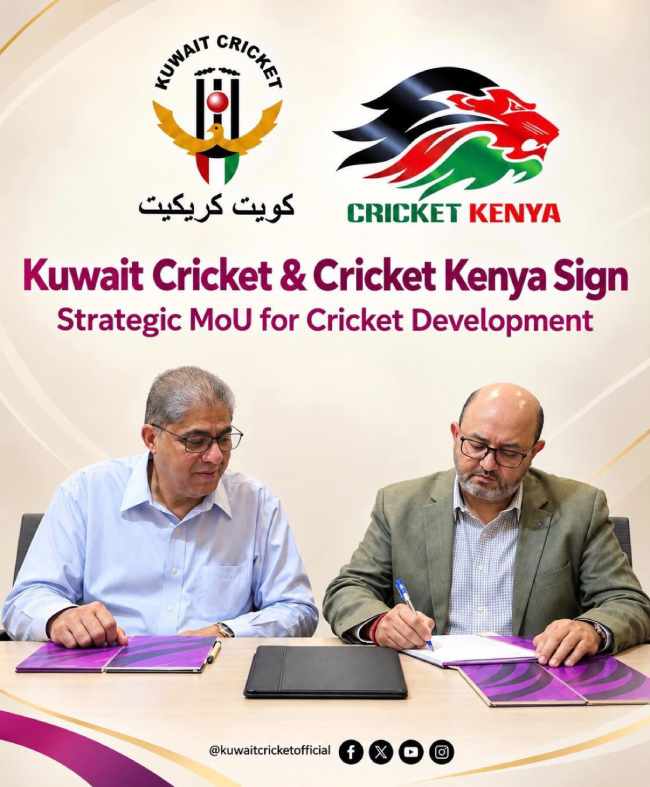
Kuwait Cricket and Cricket Kenya Sign Strategic MoU to Strengthen Cricket Development

 
 xf2
 

Kuwait Cricket and Cricket Kenya have officially signed a Memorandum of Understanding (MoU), marking a significant step towards strengthening cricket development and fostering closer collaboration between the two cricketing nations.

The MoU was signed by Mr Asad Khan, Board Advisor of Kuwait Cricket, and Mr Bhavesh Gohil, Chairman of Cricket Kenya, formalising a strategic partnership focused on advancing the game and creating greater opportunities for cricketers in both countries.

The partnership aims to establish a structured pathway for the development of men’s and women’s cricket, with a strong emphasis on nurturing emerging talent, sharing knowledge and expertise, and creating regular international playing opportunities. As part of the agreement, annual bilateral series will be organised between the men’s and women’s national teams, featuring a minimum of three T20 Internationals (T20Is) in each series. These fixtures will provide both nations with valuable opportunities to compete at the international level and strengthen their competitive capabilities.

 xf2

The MoU reflects a shared commitment to expanding opportunities for cricketers, promoting technical and developmental cooperation, and building stronger ties between the cricketing communities of Kuwait and Kenya.
By combining their expertise and resources, Kuwait Cricket and Cricket Kenya aim to establish a sustainable framework that supports player development, strengthens competitive cricket, and creates new opportunities for the next generation of cricketers.

This partnership marks a positive step towards advancing the game, deepening international cooperation, and creating a lasting impact on cricket development in both nations.

  
****************************************************

A study ties hitting kids to lower academic performance and riskier teenage conduct


A new University College London (UCL) study has found that smacking children as a form of punishment may be associated with poorer academic performance and increased risky behavior during adolescence.

Researchers analysed data from approximately 19,000 children born in the United Kingdom between 2000 and 2002, tracking their development at ages three, five, and seven.

The study concluded that physical punishment “does no good whatsoever,” with all observed outcomes indicating potential harm to children’s development.

Among the key findings, children who were smacked were more likely to fail to achieve five GCSE passes at grades A*–C, including English and Maths, with a 5.7 percentage point increase in failure risk.

The research also found that 14-year-olds who had experienced physical punishment in early childhood were 33% more likely to engage in risky behaviors, including bullying, BBC reports.

Lead researcher Associate Professor Anja Heilmann said the findings suggest that smacking does not improve behavior and may instead contribute to negative developmental outcomes.

However, the study is observational in nature and does not establish direct causation, as other social and environmental factors may have influenced the results.

Some academics have urged caution in interpreting the findings, noting that child development is shaped by multiple influences rather than a single factor.

The Department for Education in England stated that there are currently no plans to change the law on smacking, while reiterating that child safety remains a priority.

The issue remains politically divisive in the United Kingdom, where Scotland and Wales have banned physical punishment of children, while it remains legal in England and Northern Ireland amid ongoing debate over possible legal reform.

  
****************************************************

Kuwait banks ramp up competition with 4% loans for top clientele


Kuwait’s banking sector is witnessing intensified competition over premium customers, with medium-sized and smaller banks challenging lenders that have recently introduced loans at interest rates of around 4 percent, roughly 2.5 percentage points below the maximum rate allowed for financing entities.

The move by two banks to offer financing at around 4 percent has prompted other lenders to join the competition, raising the possibility of further rate reductions if the race to attract customers continues. However, the competition is largely focused on a specific segment of the market.

Banks are targeting Kuwaiti customers with stable employment and relatively high salaries, while residents and stateless persons are excluded from the preferential status being offered under these programs. Although eligibility criteria vary between banks, the targeted segment generally consists of customers with stable jobs and salaries, preferably starting at around 1,500 dinars a month.

The group includes high-net-worth individuals with significant deposits and investments, as well as doctors, judges, senior officers, engineers, technicians, artificial intelligence professionals, oil-sector employees and teachers. The emerging competition goes beyond the immediate cost of financing.

Banks are seeking to strengthen relationships with high-value customers, retain substantial deposits and protect liquidity levels by keeping major balances within the banking system. The preferential packages also extend beyond cheaper loans. Customers in this segment may receive exemptions or discounts on selected banking fees and charges, as well as access to services and benefits designed specifically for premium clients.

For banks, expanding credit offerings to premium customers is also viewed as a way to support future loan-book growth, particularly in housing finance, while increasing fee and commission income from banking, investment and financing services used by high-net-worth customers. The incentives therefore serve several objectives, including supporting credit growth, securing stable sources of financing, attracting new deposits and increasing the volume of transactions generated by premium customers.

Most banks offer broadly similar benefits to this segment. These include dedicated relationship managers, priority services at branches and call centers, preferential returns on some savings products, discounts or exemptions on banking fees, and credit and financing cards with higher limits and additional benefits.
Some premium banking programs also extend into investment services, concierge facilities, travel benefits and airport lounge access, making the competition for affluent customers broader than interest rates alone.

  
****************************************************

Kuwait ranks 64th internationally, sixth in the GCC, on the Human Progress Index 2026


Kuwait ranked 64th globally out of 196 countries in the 2026 Human Progress Index published by CEO World magazine, placing it in the “very high” category with a score of 85.65. The index assesses how effectively countries translate economic opportunities, public services and individual freedoms into living conditions, going beyond traditional measures of income and economic output.

The index looks beyond traditional measures of economic output and income to assess how effectively countries translate economic resources, public services and individual freedoms into quality-of-life outcomes. For businesses and investors, the assessment offers a broader view of the operating environment by examining factors such as housing, healthcare, safety, infrastructure, education and work-life balance.

Each category accounts for one-third of the overall score, although individual indicators carry different weights within the three categories. Within the GCC, Kuwait ranked fifth among the six countries covered, with the UAE in 31st place globally at 92.59 points, followed by Qatar in 47th at 87.46, Bahrain in 54th at 86.66, Saudi Arabia in 60th at 86.00, Kuwait in 64th at 85.65, and Oman in 71st at 84.26. All six GCC countries were classified in the “very high” category.

The GCC results underline the role of quality-of-life factors alongside income and economic performance when companies, employees and families assess locations. Housing affordability, healthcare, education, infrastructure, safety and work-life balance can all form part of decisions on where to invest, operate, work or live, according CEOWORLD Magazine’s 2026 Human Progress Index.

Singapore topped the global ranking with 97.88 points, followed by Switzerland with 97.78 and Denmark with 97.70. Norway and Ireland ranked fourth and fifth, while Iceland, Sweden, the Netherlands, Finland and Germany completed the top 10. European countries accounted for nine of the 10 leading positions, with Singapore the only Asian country in the group.

The index is based on three equally weighted categories, stability, satisfaction and balance, covering 23 indicators. Stability includes economic growth, taxation, life expectancy, job and income security, housing and spending conditions, household income after taxes and transfers, and net financial wealth.

The satisfaction category examines factors affecting daily life and public services, including safety, happiness, governance, perceptions of corruption, child and maternal mortality, infrastructure and transport, healthcare and education. The balance category covers human rights, civil liberties, political rights, work-life balance, religious freedom, gender equality and environmental stewardship.

CEO World said the index draws on international economic, development, institutional and environmental datasets, using the latest available data for each source alongside expert review and editorial assessment. It also noted that “Human Progress 2026” refers to the release year of the index and does not mean that all underlying data was collected in 2026, as individual datasets follow different update cycles.

  
****************************************************

Kuwait's new charity law emphasizes transparency


Minister of Social Affairs, Family and Childhood Affairs Dr. Amthal Al-Huwailah has stressed that Kuwait’s new law regulating charity and humanitarian work is intended to organize and support the sector rather than restrict charitable societies, while strengthening transparency, governance and public confidence.

Speaking during a meeting with the heads of boards of directors of charity societies to discuss the new law, Al-Huwailah said the legislation provides a clear framework for the continuation and development of charitable and humanitarian activities while maintaining trust among charities, donors and beneficiaries.

She highlighted the longstanding role of Kuwaiti charity societies in providing assistance both inside and outside the country, noting their work across different regions and in response to varying needs, including natural disasters. Al-Huwailah said charitable societies had strengthened their presence inside Kuwait over the past two years, adding that the meeting was the third with representatives of the charitable sector.

She said the Ministry of Social Affairs remains open to suggestions and aims to strengthen cooperation and partnership with charitable organizations. The minister said the meeting was held following the issuance of the new law to provide a direct discussion of its provisions, definitions, objectives and implementation mechanisms.

She stressed that the legislation supports both charitable societies and the state by defining responsibilities, enhancing transparency and governance, and strengthening oversight of the sector. The framework, she said, is also based on Kuwait’s international agreements and assessments.

Al-Huwailah emphasized that charitable societies have a shared responsibility to comply with applicable laws, regulations and oversight requirements, including financial and administrative controls, reporting obligations and procedures governing their operations and personnel. She also warned that some individuals have attempted to exploit the names of charitable societies, stressing that protecting the reputation of these organizations is a shared responsibility.

The minister called on charities to maintain an open line of communication with the ministry and relevant authorities, and to immediately report any attempts to misuse a society’s name during events, forums or fundraising activities. She said prompt reporting would allow the authorities to take the necessary measures to protect individual charitable societies, their reputations and the wider charitable sector.

  
****************************************************

10.15 billion dinars in POS spending demonstrates Kuwait's transition to e-payments


Spending through point-of-sale (POS) terminals in Kuwait reached approximately 10.15 billion dinars during the first eight months of 2026, highlighting the scale of electronic payments in everyday consumer and business transactions.

According to data published by Al-Anba daily, spending was recorded through around 110,458 POS terminals, which processed approximately 543.57 million purchase transactions between January and the end of August. The figures translate into average daily spending of about 41.78 million dinars, through approximately 2.24 million transactions each day.

Monthly spending averaged around 1.27 billion dinars, with nearly 67.95 million transactions recorded each month. The average POS transaction stood at approximately 18.67 dinars, indicating the extensive use of electronic payments for a wide range of routine purchases and services.

The intensity of POS usage is also reflected in activity at individual terminals. Each device processed an average of around 4,921 transactions during the first eight months, equivalent to approximately 615 transactions per month or more than 20 transactions a day. Based on the total spending and number of terminals, the average value processed by each POS device was approximately 91,900 dinars over the eight-month period.

This translates to about 11,490 dinars per month, or nearly 378 dinars per day per terminal. The scale of the figures underscores the growing importance of electronic payment infrastructure to Kuwait’s retail and services economy. With more than half a billion POS transactions recorded in eight months, the network is handling tens of millions of dinars in spending every day across businesses and service outlets nationwide.

  
****************************************************

Kuwait issues a new Media Regulation Law, repealing three current laws


Kuwait has introduced a new Media Regulation Law, repealing three existing media laws and setting a unified framework for traditional, audiovisual, electronic and social media activities, with existing media operators given six months to regularize their status after the executive regulations are issued.
Kuwait has issued a new Media Regulation Law aimed at modernising the country’s media framework and addressing legislative gaps arising from rapid technological and digital developments.

The Official Gazette, Kuwait Alyawm has, published Decree-Law No. 102 of 2026 issuing the new law in Issue No. 1811, released past midnight on Sunday. Under Article 2, the competent minister is required to issue the law’s executive regulations within six months of its publication in the Official Gazette, along with the decisions necessary to implement its provisions.

Existing owners of media activities covered by the law must regularise their status within six months of the issuance of the executive regulations. Failure to do so will result in cancellation of their licences. The new decree-law repeals Law No. 3 of 2006 on publications and publishing, Law No. 61 of 2007 on audiovisual media, and Law No. 8 of 2016 regulating electronic media. It also repeals any provisions that conflict with the new law.

The law will enter into force six months after its publication in the Official Gazette, while the relevant ministers are responsible for implementing its provisions. According to the explanatory memorandum, the legislation represents a comprehensive restructuring of Kuwait’s media regulatory framework, taking into account the rapid transformation of the media environment driven by digital technology.

The memorandum said the law establishes a flexible framework based on general principles and provisions, while leaving detailed, procedural and technical matters to the executive regulations so the regulatory system can adapt more quickly to technological developments.

It also reaffirms constitutional guarantees for freedom of opinion, expression, press, printing and publishing. Freedom of opinion is guaranteed, allowing individuals to express and publish their views verbally, in writing or through other means, subject to laws protecting public order and morals, the rights and reputation of others, national security and national unity.

The law also provides that media activities covered by its provisions, as well as books and publications displayed at official book fairs, will not be subject to prior censorship. However, films, books and other non-periodical publications printed or published in Kuwait will require prior approval from the competent ministry before printing, circulation or publication.

The legislation covers a broad range of activities, including newspapers and publications, audiovisual media, broadcasting and rebroadcasting services, electronic media, social media promoters and advertisers, news agencies, Arab and foreign media correspondents, artistic production companies, films and cinemas, artistic and musical events, and advertising.

It also sets out violations, offences and penalties for breaches of the law, including operating media activities without a licence, with sanctions including financial penalties and administrative measures.

  
****************************************************

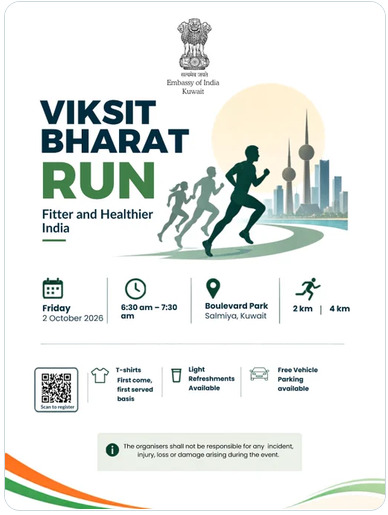
The Viksit Bharat Run is back!

The Viksit Bharat Run is back!

WhatsApp Image 2026 10 01 at 4.28.22 PM

Join the Run and celebrate the spirit of India on 2 October, on the occasion of Gandhi Jayanti, at Boulevard Park, Salmiya. Run with your family and friends for a fitter and healthier India.

  🇮🇳 📆 Friday, 2 October

📍 Boulevard Park, Salmiya

🏃‍♀️ 2 KM | 4 KM

🕐 6:30 AM – 7:30 AM

Ramachandran NK, the owner of Bhavans Schools, passed away


The Bhavans community and members of the Indian business and professional community in the GCC are mourning the death of Mr Ramachandran NK, founder and owner of Bhavans Schools in the Gulf region and a member of the Indian Business and Professional Council (IBPC).

News of his passing was received with deep sorrow, with tributes highlighting his contribution to the Bhavans community and his association with the wider Indian community in the region. In a message of condolence, the IBPC expressed its profound sorrow over his death and extended heartfelt condolences to his family and members of the Bhavans community.

Ramachandran was closely associated with the Bhavans Schools, which serve the Indian community across the GCC. His passing marks a loss for the school community and those who worked alongside him. The IBPC conveyed its condolences to his family and the wider Bhavans community during this difficult time and prayed for his soul to rest in eternal peace.

  
****************************************************

Kuwait Food Authority calls for more awareness to decrease food waste.


The Public Authority for Food and Nutrition has called for greater public awareness and responsible consumption to reduce food loss and waste, stressing that food conservation is a shared responsibility.

Acting Director General Abeer Al-Ramah made the remarks during an awareness event at The Avenues Mall on Tuesday to mark the International Day of Awareness of Food Loss and Waste, observed annually on September 29.

Al-Ramah said reducing food waste can begin with simple daily practices, including buying appropriate quantities, storing food properly and making use of leftovers instead of throwing them away.

She noted that food passes through several stages and requires significant effort and resources before reaching consumers, making its preservation part of responsible consumption.

Al-Ramah urged the public to help promote a culture of reducing food waste, saying that conserving food also supports the protection of national resources and sustainability.

  
****************************************************

All Kuwait government services will transfer to Sahel within six months


Kuwait is accelerating its digital government drive, with all government agencies instructed to transfer their digital services to the unified Sahel application within six months. The move builds on the growing success of Sahel in enabling citizens and residents to access government services electronically without the need to visit government offices, stand in queues or move between different agencies to complete transactions.

The expansion of Sahel is aimed at creating a single, unified digital experience for government services in Kuwait while strengthening electronic connectivity and integration between government entities. It is also expected to improve service efficiency, reduce processing times and help rationalize government spending.

The initiative forms part of Kuwait’s broader push toward paperless government and digital transformation, supporting the objectives of Kuwait Vision 2035. Through Sahel, users can access and follow up on government transactions electronically, making it easier for citizens and expatriate residents to complete procedures and monitor the status of their requests without repeated visits to government offices.

The development of digital journeys through Sahl has already contributed to improving the government service experience by increasing integration between agencies and enabling transactions to be processed through connected electronic channels. The unified platform has also strengthened interaction between government agencies and users by providing greater transparency over the progress of applications and transactions.

Users can directly monitor the status of their requests, reducing the need for in-person follow-ups. Officials see the wider adoption of Sahel as a key step toward consolidating Kuwait’s multiple government digital platforms and service channels into a single, more accessible digital gateway.

Under the six-month deadline, government agencies will be required to move their digital services to Sahl while continuing to develop and update the platform in line with usage data, technological developments and the evolving needs of citizens and residents.

The expansion is expected to further reshape how government transactions are completed in Kuwait, with the emphasis shifting from residents travelling between government entities to services being brought directly to users through one integrated digital platform.

  
****************************************************

Kuwait enhances govt digital integration to improve data exchange between government systems


Kuwait is moving to accelerate the integration of government systems as the Ministry of State for Communications and Information Technology urges government institutions to complete the requirements for electronic linking and data exchange through the Apigee platform. The initiative is intended to strengthen connectivity between government entities and improve the quality and efficiency of digital services provided to beneficiaries.

The ministry has stressed the need for government agencies to quickly link services launched through Sahel, Kuwait’s unified government application for electronic services, with the Apigee platform. The move is aimed at improving the exchange of data between government systems and creating more integrated digital services for users.

The ministry said activating electronic linking and data exchange through the platform comes in line with Council of Ministers directives to complete government integration requirements and strengthen data exchange between various government entities. For Kuwait’s digital government programme, the integration is intended to improve the efficiency of government operations, enhance data quality and simplify procedures by enabling government entities to exchange information more effectively.

noThe initiative is also expected to help reduce duplication between government entities and support more coordinated delivery of electronic services. The ministry said the measures form part of Kuwait’s broader direction toward digital transformation, with greater integration between government systems aimed at improving the use and delivery of digital government services.

  
****************************************************

PACI launched an online status modification service


The Public Authority for Civil Information (PACI) has launched a new electronic service allowing applicants covered by Article 7 bis (personal guarantee) to submit requests for status modification online.

The service is available through the Sahel application or via the Authority’s website, enabling eligible applicants to submit their requests electronically without the need to visit the Authority in person.

  
****************************************************

Al Shaheed Park's third phase will begin with a two-day carnival on October 1


Al Shaheed Park is set to open its third phase to the public on October 1, with a two-day celebratory carnival designed around the themes of peace, harmony and hope. The opening celebrations on October 1 and 2 will transform the park into a vibrant public space featuring cultural, artistic, entertainment and sporting activities, while giving visitors an opportunity to explore the new facilities and experiences introduced as part of the third phase.

Speaking at a press conference at the Sheikh Jaber Al-Ahmad Cultural Centre, Anwar Al-Yatami, head of the Supervision, Management and Follow-up Committee for the third phase and representative of the Amiri Diwan, described Al Shaheed Park as a national project that has added a new dimension to Kuwait’s cultural and recreational landscape.

She said the third phase builds on the achievements of the park’s first and second phases while introducing new components that bring together culture, art, entertainment and sports within a modern and sustainable environment. According to Al-Yatami, the latest phase is intended to strengthen Al Shaheed Park’s position as a major destination in Kuwait and provide an integrated experience for families and visitors.

The opening carnival will feature a range of activities across the park over two days. These will include light shows around the dome of Al-Sour Theater, family and children’s entertainment, Kuwaiti heritage performances, festive processions and artistic works and creative installations. Nadera Al-Ahmad, a member of the supervisory committee, said the programme was designed to introduce visitors to the park’s diverse facilities through activities combining culture, arts, entertainment and sports.

The celebrations will also include physical and sports activities, with local athletes participating in parkour and skating arenas. Additional activities will be offered across the park’s facilities by sponsors and partners. Visitors will be able to use the carnival schedule and interactive map to identify the locations of activities and performances throughout the park.

Al-Yatami expressed appreciation to the Governor of the Capital, Sheikh Abdullah Salem Al-Ali, for his support, as well as to the sponsors and all those involved in developing the third phase. She said the committee hoped the new phase would build on the success of the previous stages and provide a platform for further events and activities serving the community and strengthening Kuwait’s cultural and entertainment offerings.

  
****************************************************

Small transactions, large fines. Kuwait tightens AML compliance in the jewelry sector.


Kuwait is tightening its scrutiny of money-laundering risks in the precious-metals and jewelry sector, with businesses being urged to look beyond individual transaction values and pay closer attention to patterns of repeated purchases.

Gold and jewelry have long been an area of concern for financial-crime regulators because they combine high value with portability, liquidity and ease of resale. Kuwait’s risk assessments have identified the precious-metals sector as particularly vulnerable to money-laundering risks, placing greater emphasis on effective anti-money laundering and counter-terrorist financing (AML/CFT) controls.

Under current Ministry of Commerce and Industry (MOCI) procedures, jewelry businesses are required to conduct basic customer due diligence for sales and purchases. Transactions exceeding KD 3,000 are subject to additional documentary requirements, while enhanced due diligence may be required in certain higher-risk circumstances. However, the regulatory focus is increasingly extending beyond the value of a single transaction.

MOCI’s updated 2026 compliance procedures identify small, repeated transactions conducted within close periods of time as a suspicious indicator. The Ministry’s July 2026 guidance on suspicious transaction reporting also highlights multiple purchases over a short period as conduct requiring closer scrutiny.

For example, a customer may purchase jewelry worth KD 900, return a few days later to make a KD 1,200 purchase and then spend another KD 850 the following week. While none of these transactions individually reaches the KD 3,000 threshold, the transactions warrant examination and must be viewed collectively.

A suspicious indicator, however, does not automatically mean that money laundering has taken place or that a suspicious transaction report must be filed. It requires the business to examine the circumstances and assess whether there are reasonable grounds for suspicion. Where such grounds exist, the transaction must be reported to the Kuwait Financial Intelligence Unit (KwFIU) within two working days.

The consequences of failing to identify and report suspicious activity can be significant. Under MOCI procedures, where an inspector determines that suspicious activity should have been reported but was not reported within the required period, the business may face a KD 5,000 fine.

For jewelry businesses, one of the key challenges is determining what constitutes a pattern of “repeated” transactions or how short a period must be before transactions are considered sufficiently connected to warrant further examination.

The regulations do not prescribe a fixed number of transactions or a specific number of days. Instead, businesses are expected to apply a risk-based approach and develop a clear and defensible methodology for identifying, reviewing and escalating potentially suspicious activity.

Another important consideration is that the AML/CFT framework does not provide a blanket exemption based on the size or ownership structure of a jewelry business. While the way compliance controls are implemented can be proportionate to the nature, scale and complexity of the business, the underlying AML/CFT obligations continue to apply in full.

For jewelry businesses, the compliance challenge in 2026 is therefore no longer limited to determining whether a customer’s purchase crosses the KD 3,000 threshold. Businesses must now be able to recognize when several apparently ordinary transactions, considered together, form a pattern requiring examination. They must also be able to demonstrate that they have a documented and rational process for determining when such activity requires examination and/or escalation.

In a sector where relatively modest purchases can take on regulatory significance when viewed collectively, effective transaction monitoring is becoming an increasingly important part of AML compliance and a key safeguard against potentially costly regulatory action.

  
****************************************************

MoE cautions schools not to deny students education or consequences for unpaid fees


Kuwait’s Ministry of Education has warned private schools that students must not be denied education, prevented from sitting examinations or deprived of their academic results because of unpaid tuition fees, as families across the country adjust to newly approved increases in private-school fees.

The ministry’s latest regulations allow eligible private schools to raise tuition fees by between 10 and 15 percent, while imposing stricter controls on how the increases are applied and how schools collect payments. The rules also place explicit safeguards around students’ access to classes, examinations and academic results.

Under the latest decision covering Arabic-language and Pakistani private schools, institutions charging annual fees between KD250 and KD450 may increase tuition by up to 15 percent, while schools charging KD451 or more may raise fees by up to 10 percent. The increase can be applied only once and must remain within the percentages approved by the ministry.

A similar framework is already being implemented in Indian-curriculum schools. Under Ministerial Resolution No. 375 of 2025, schools charging between KD300 and KD500 may increase fees by up to 15 percent, while those charging KD501 and above may increase fees by up to 10 percent. The Public Administration for Private Education instructed Indian schools to implement the approved increases for the 2026/2027 academic year.

The ministry has also established a fixed payment mechanism under which tuition fees are to be collected in three equal instalments. Schools are not permitted to alter the number, value or scheduled payment dates of the instalments.

Schools must also submit their approved fee structures to the General Administration of Private Education for review and are required to make the approved fees clearly available to parents, either through school noticeboards or their websites. The regulations are particularly significant for families struggling to meet higher education costs.

Indian schools began issuing circulars to parents after the ministry directed them to implement the previously approved fee increases for the current academic year. For many Indian schools, the move followed nearly a decade during which tuition fees had remained largely frozen.

Parents interviewed by the media said the increase comes at a time when expatriate households are already dealing with higher rents, food costs and other living expenses. Some parents with several children in private schools said the additional annual cost could amount to hundreds of dinars across their families. Others said they were being forced to reconsider spending on tutoring, leisure and other household expenses to accommodate higher school fees.

School administrators, meanwhile, have argued that the increases are necessary after years of rising operating costs, including rents, teacher salaries and facility maintenance, while tuition revenues remained restricted.

Some schools have said additional income will be directed toward teacher salaries, professional development, technology, laboratories and other improvements to the educational environment.

Despite allowing schools to increase tuition, the ministry has drawn a clear line between fee collection and a child’s right to continue receiving education. Private schools covered by the regulations are prohibited from preventing students from attending classes or receiving educational services because of outstanding fees. They cannot bar students from sitting mid-year or final examinations, expel them solely over unpaid tuition during the academic year, or withhold their academic results.

The ministry has also required schools to ensure that parents and students can access examination results even when tuition payments remain outstanding.

The directive concerning Indian schools similarly states that students should not be prevented from receiving educational services, sitting examinations or accessing related academic services because of fee-payment issues.

Some Indian schools have already introduced measures to help families struggling with payments, including extended payment arrangements, sibling discounts, scholarships and case-by-case assistance. School administrators have also acknowledged that some families have accumulated outstanding fees and said they are willing to work with parents facing genuine financial difficulties.

The new regulations therefore seek to balance two concerns: allowing private schools to adjust fees in response to rising operating costs while ensuring that financial disputes between schools and parents do not interrupt a child’s education.

For parents, however, the key issue now is whether higher fees will translate into improved educational services and whether schools will maintain transparency in the additional charges they impose.

The Ministry of Education’s regulations make clear that approved fee increases do not give schools the right to introduce additional charges beyond the authorised structure or to use a student’s education, examinations or academic results as leverage for collecting outstanding tuition.

  
****************************************************