Kite Snaps

Bachelor Brothers
Eye in the sky over India: Camera on a kite snaps fabulous photographs of the sub-continent

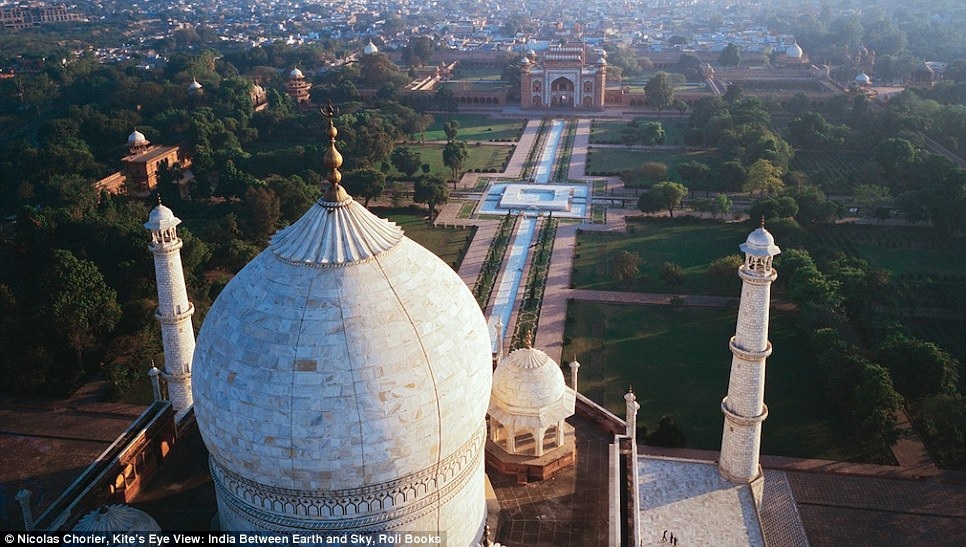
The iconic white stonework of the Taj Mahal with the city of Agra behind - 47-year-old Nicolas developed his passion for photography after growing up in France with weekly slide shows around the fireplace
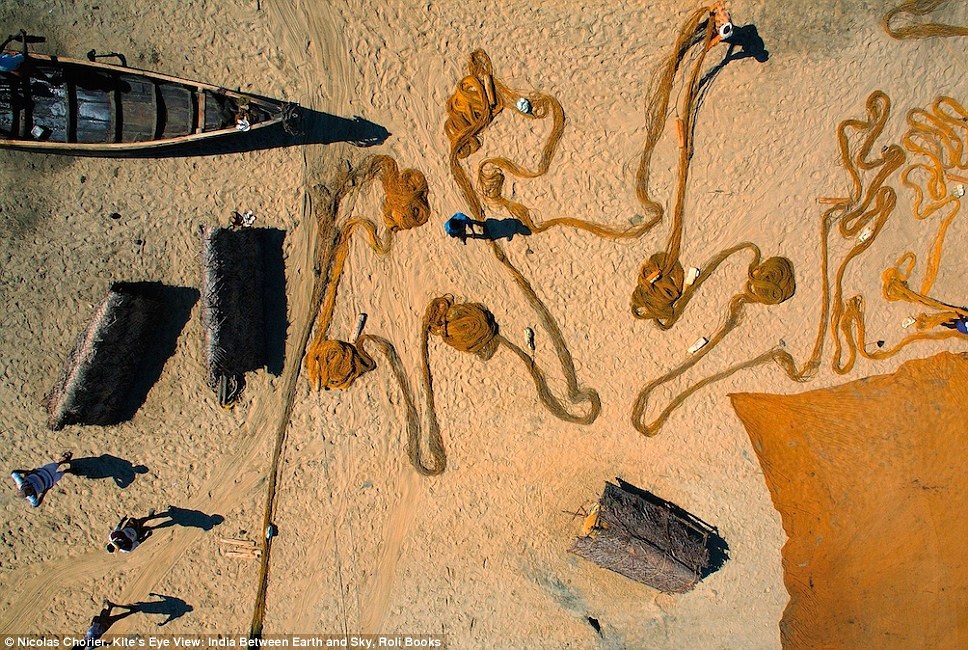
Lengths of of fishing net looks like strings of spaghetti as fishermen walk among the scattered debris of their trade on this beach in Kovalam, Kerala at the southern tip of India
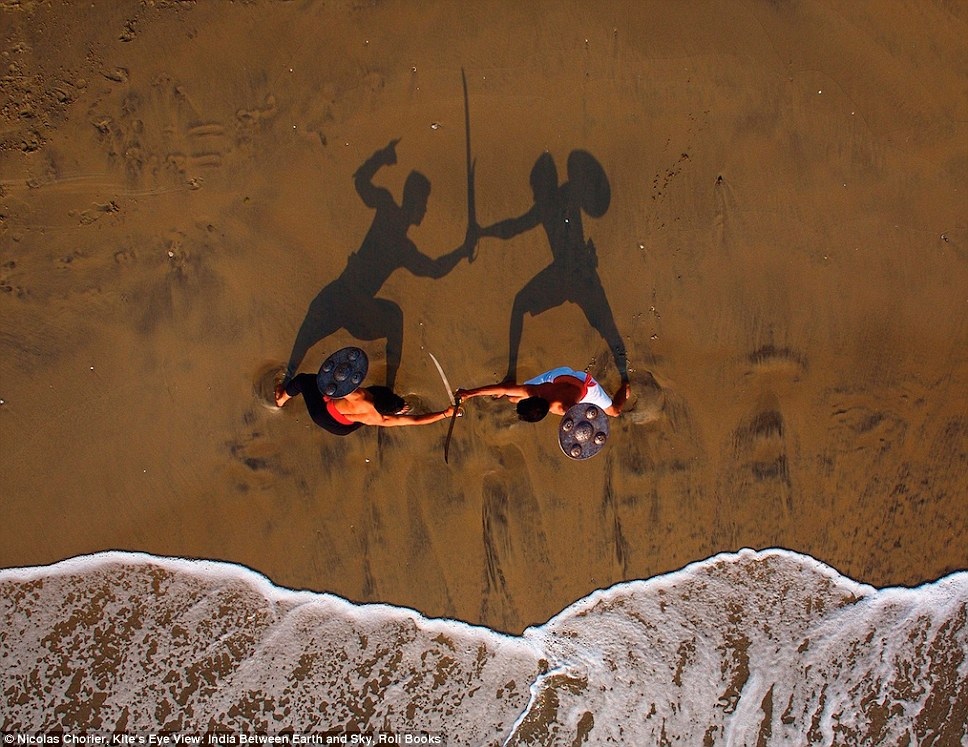
The stunning images provide a bird's eye view of everyday scenes such as two people partaking in a martial art on a beach in Karala and iconic buildings such as the Taj Mahal.
'From above it's a completely new vision, new perspectives, new ways to understand the landscape and heritage,' said Nicolas.

More...
Caught on camera: The moment stranded motorist is rescued from submerged car by heroic driver and his son
Meet chilly Lily: The hairless dog who has to wear an adult sized onesie to keep the cold out

'Every place has something interesting to show from above. The results are full of discovery, showing new perspectives, new shadows.
'Getting so close to subjects is magical, exquisite and thrilling.'
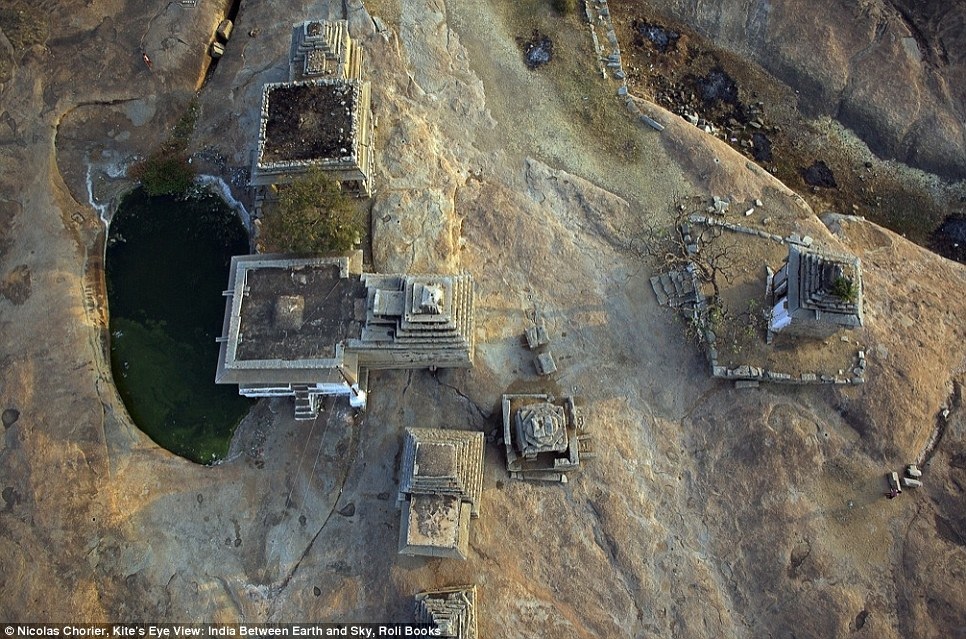
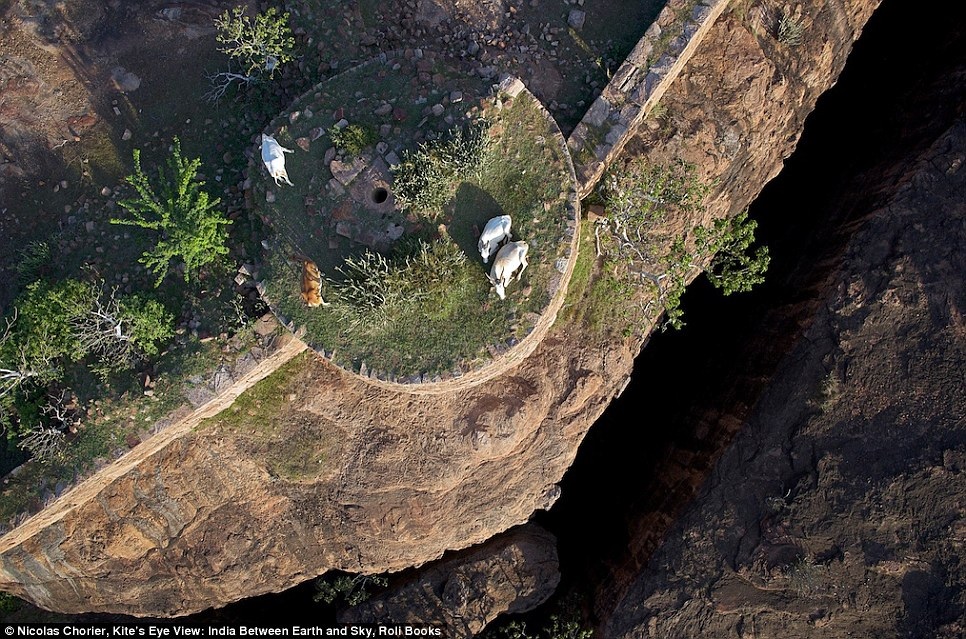
Hampi is a village in northern Karnataka state, India, located within the ruins of Vijayanagara, which dates back to the 1st century BC
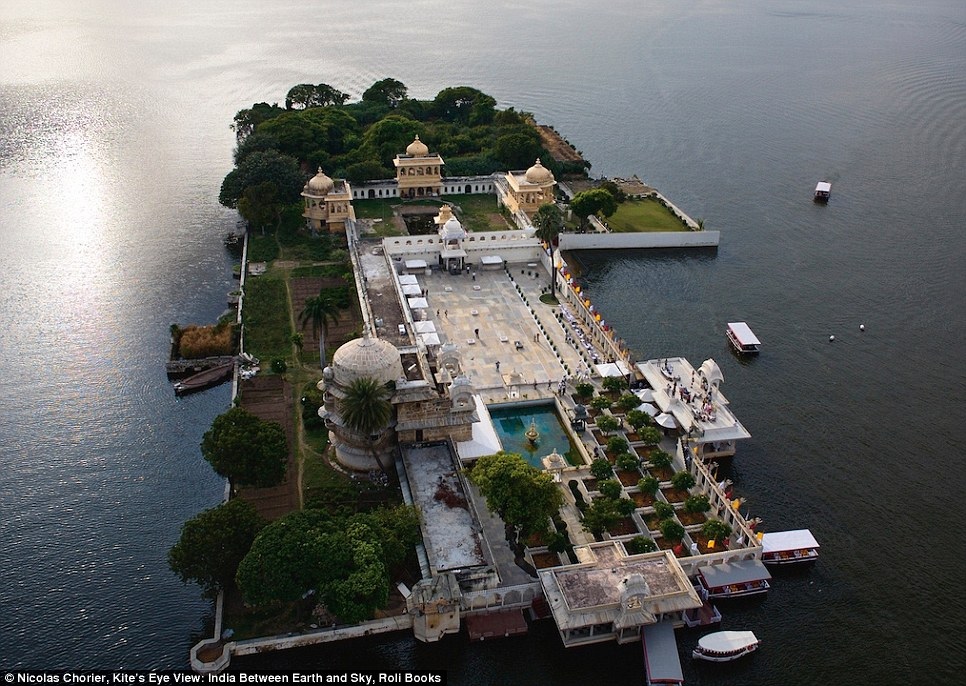
Part of the beauty of Chorier's style is it allows him to shoot buildings such as Udaipur Lake Palace in Rajasthan, from the air in an ecological way - without resorting to helicopter or plane
Photography has always been a part of Nicolas's life.
The 47-year-old grew up in France with weekly slide shows around the fireplace.
He was given his first camera when he was 12-years-old and quickly became a photography enthusiast.
As a teenager he also loved flying kites and one day decided to combine his two passions.
Nicolas, who lives in Pondicherry, India, makes his own kites using siliconised nylon and carbon sticks.
The photographic equipment is mounted in a small cradle hanging on a line under the kite.
Only when his kite is in position and flying smoothly does he send the camera up.
His stunning pictures cast new light on iconic buildings and give a bird's eye view of landscapes in India, Uzbekistan and Laos.
Men participating in the Indian martial art of Kalaripayattu in the southern state of Kerala. It is one of the oldest fighting systems in existence, practiced in the state and contiguous parts of Tamil Nadu and Karnataka
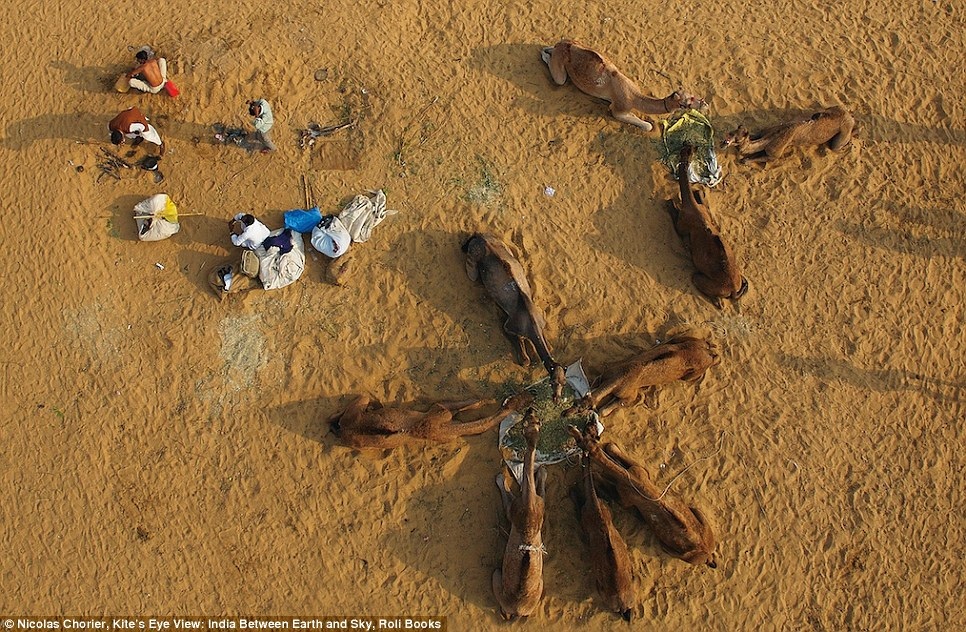
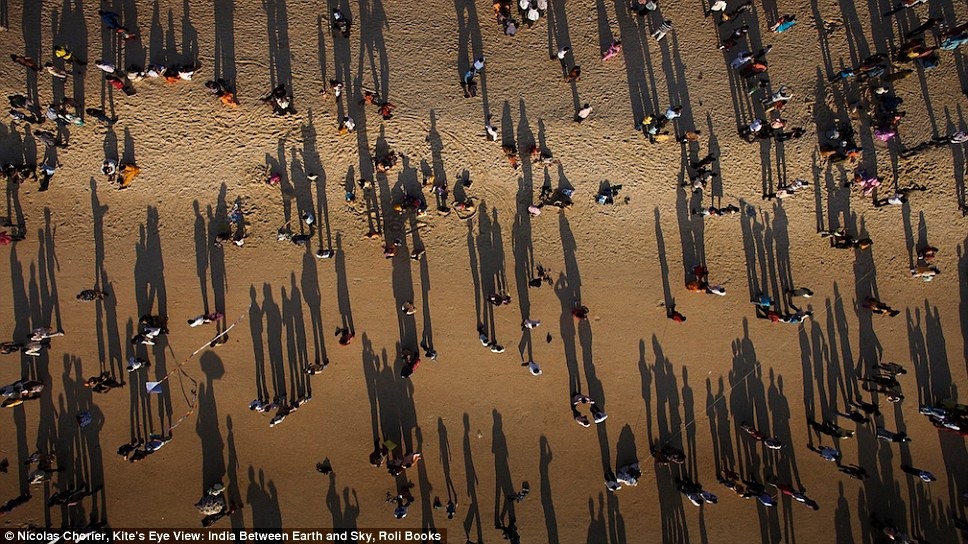
Camel riders and their animals cast long shadows as they take a rest in the sun in Pushkar - in the Indian state of Rajasthan
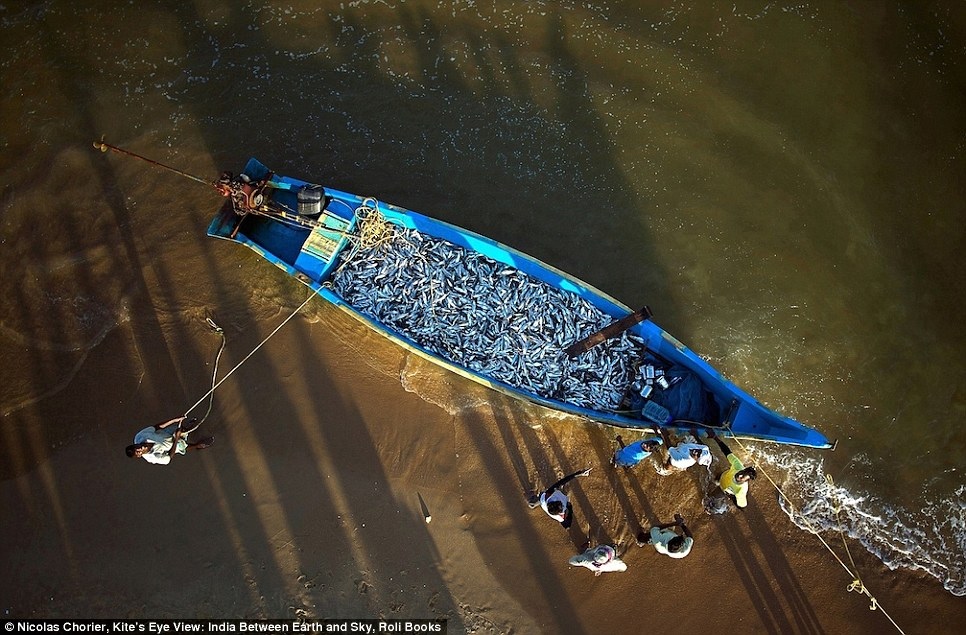
A gaggle of fisherman drag in a boat full with their bounty from the sea. Nicolas was given his first camera when he was 12-years-old and quickly became a photography enthusiast
An air-to-ground video link beams live images back to a portable TV screen strapped around the photographer's neck.
Nicolas then uses a remote control to move the cradle and camera into the best position to take the picture.
'Each site has its own challenges,' he said.
'I have to consider the atmosphere temperature, the crowds, winds, electrical wires and obstacles. It can become very touchy at times.'
It's not just getting close to his subjects Nicolas enjoys about kite photography, it's the ecological benefits of what he does.
'I'm very concerned about ecology and saving our natural resources,' he said.
'I love the idea of using only the wind to do such activity, compared to burning kerosene with a helicopter, or wasting helium with a balloon.'
To capture the moment the Frenchman holds his kite reel under one arm with the remote control over one shoulder and a video monitor around his neck. He can point the camera in any direction and zoom in or out by sending it up or down the kite's string in a special harness.
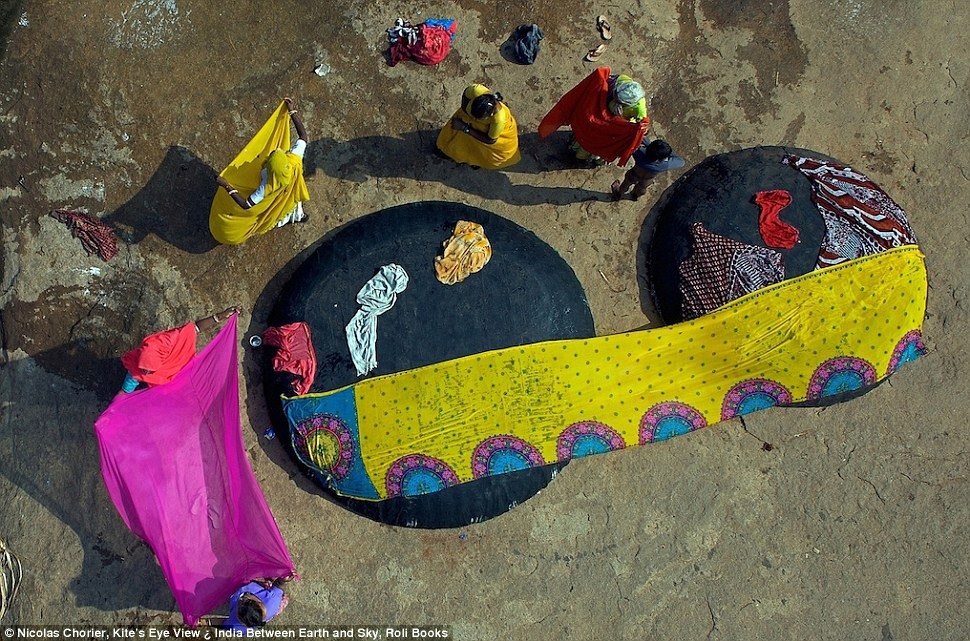
Women put their colourful freshly washed saris out to dry in the sweltering sun while a child comes to assist
Chorier says he loves the idea of using only the wind to take photos as compared with burning kerosene with a helicopter, or wasting helium with a balloon'
Nicolas uses a remote control to move the cradle and camera into the best position to take a picture. He says each site brings its own challenges
The photographer says: 'I have to consider the atmosphere temperature, the crowds, winds, electrical wires and obstacles. It can become very touchy at times'

iiNicolas it is not just getting close to his subjects that he enjoys, but also the ecological benefits of not using an aeroplane or other mechanical device

 
Home