Notice Board

The Traffic Department explains what motorists should know about the five-second warning at traffic signals


Kuwait’s General Directorate of Traffic has reminded motorists to pay attention to the flashing warning lights at traffic signals, explaining that the system provides a five-second warning before the lights change to help drivers react safely and avoid sudden manoeuvres.

In an awareness video released by the Ministry of Interior, the Traffic Department explained how motorists should respond to the flashing green and red lights, stressing that the feature is designed to improve safety at intersections and reduce accidents, particularly rear-end collisions.

A flashing green light signals drivers to prepare to stop gradually and safely as the signal is about to turn yellow and then red. Motorists are advised against sudden braking, which could put vehicles behind them at risk.

A flashing red light, meanwhile, tells drivers to remain stationary and prepare to proceed, but only when the signal actually turns green. The department stressed that motorists must not move while the red light is flashing.

The Traffic Department emphasized that the flashing lights serve as advance warnings, not independent instructions to stop or proceed. Drivers were urged to remain calm, stay alert and follow the actual traffic signal before taking action.

The Ministry of Interior activated the flashing-light warning feature at traffic signals last August to give motorists and pedestrians time to prepare for signal changes, with the aim of improving safety and traffic flow at intersections.

  
****************************************************

The Commerce Ministry has launched a consolidated portal that provides all services on one platform


The Ministry of Commerce and Industry has launched a unified digital portal bringing all its services under a single platform, in a move aimed at streamlining procedures, simplifying access to commercial services and enhancing the user experience.

The new portal features an artificial intelligence-powered system designed to guide users towards the services they need, facilitate procedures and improve the overall efficiency of service delivery.

The initiative is expected to provide business owners and service applicants with easier and faster access to the ministry’s electronic services through a unified digital interface.

  
****************************************************

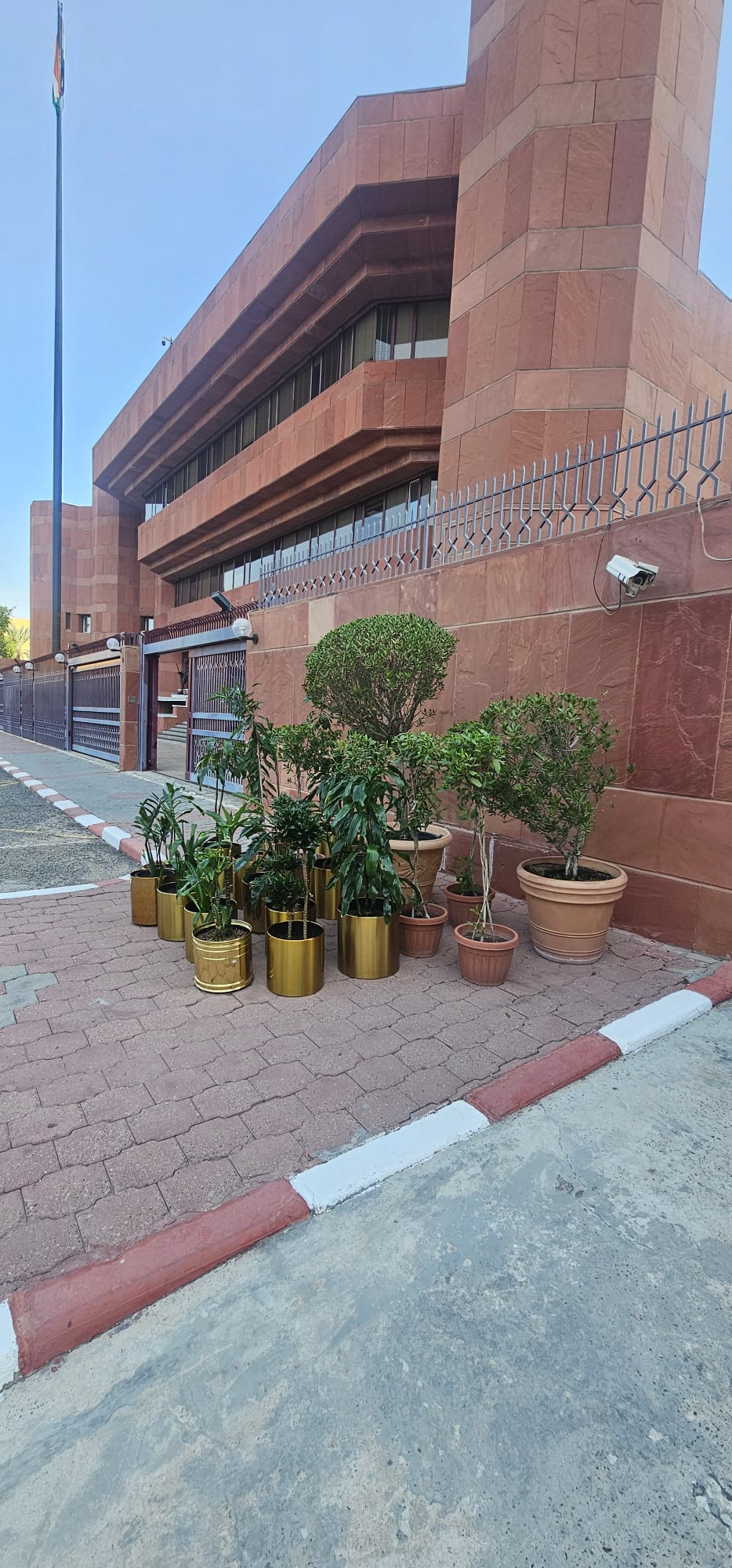
Embassy of India, Kuwait Celebrated Diwali Diwaniya (2-3 November 2026)

Embassy of India, Kuwait Celebrated Diwali Diwaniya (2-3 November 2026)

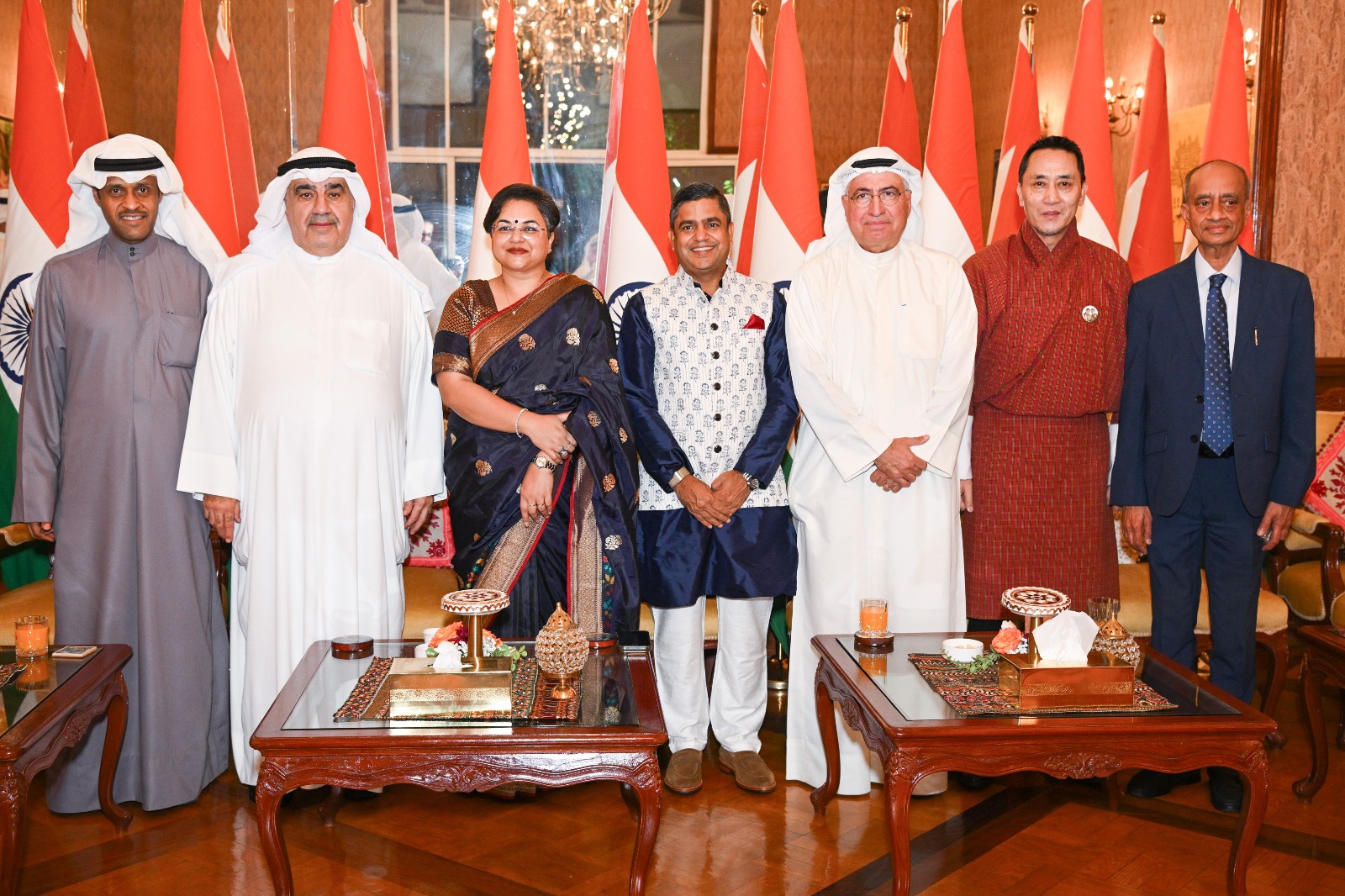
WhatsApp Image 2026 11 04 at 8.46.24 PM2 11zon1.      The Embassy of India in Kuwait organised a unique “Diwali Diwaniya” at India House on 2 and 3 November 2026, bringing together the festive spirit of Diwali, India’s Festival of Lights, and Kuwait’s traditional culture of Diwaniya. The event also commemorated 65 years of the establishment of India–Kuwait diplomatic relations, celebrating the enduring friendship and strong cultural ties between the two countries. It showcased the rich cultural heritage of both countries and highlighted the shared values of hospitality, togetherness and community bonding that form the strong bulwark of people-to-people ties in the long-standing and friendly India–Kuwait relations

2.       The celebrations held special significance as both Diwali and the Kuwaiti Diwaniya were inscribed on UNESCO’s Representative List of the Intangible Cultural Heritage of Humanity in 2025. The event celebrated these two living traditions and their shared values of cultural exchange, dialogue, hospitality and community participation.

3.       The two-day celebrations featured distinct programmes for a diverse audience. The Diwali Diwaniya on 2 November 2026 was hosted by the Ambassador of India to Kuwait, Mrs. Paramita Tripathi, and her spouse, Dr. Pradyumn Tripathi. The event brought together Kuwaiti dignitaries, members of the diplomatic corps, representatives of the Indian community, the media and business communities, and friends of India. The evening featured live instrumental music, offering guests a glimpse of India’s rich musical traditions.

4.       A special Diwali Diwaniya for women was organised on 3 November 2026 at India House, hosted by Ambassador Mrs. Paramita Tripathi. The programme featured vibrant dance and Kathak fusion performances by local Indian artists. A special fashion presentation showcased Indian textiles through contemporary designs inspired by Kuwaiti couture, presented by models. Guests also had the opportunity to experience traditional Indian mehndi (henna) art and saree draping, celebrating India’s diverse textile and cultural traditions.

5.       The celebrations also offered guests an opportunity to experience India’s diverse cultural heritage through traditional cuisine, arts, handicrafts and tourism. A selection of Indian delicacies and regional specialities highlighted the richness of the country’s culinary traditions.  Festive decorations, traditional lighting and a Diwaniya-inspired setting created a warm and welcoming atmosphere, reflecting the cultural traditions of both countries.

6.       The event also featured a special showcase of Indian handicrafts under the Government of India’s One District One Product (ODOP) initiative, promoting distinctive products and traditional craftsmanship from districts across the country. The display included an array of exquisite crafts and art forms, such as blue pottery, lamps, intricate filigree work and paintings, offering guests a glimpse into India’s rich artistic traditions. The showcase celebrated the creativity and skills of local artisans and highlighted the importance of preserving and promoting India’s traditional crafts.

7.       The Embassy of India expresses its sincere appreciation to Indian Heritage for its valuable support and cooperation in organising the celebrations.

8.       For further information regarding the event, please contact the Embassy of India in Kuwait at pol.kuwait@mea.gov.in.

WhatsApp_Image_2026-11-04_at_8.46.18_PM1_11zon.jpg WhatsApp_Image_2026-11-04_at_8.46.18_PM_11zon.jpg WhatsApp_Image_2026-11-04_at_8.46.20_PM_11zon.jpg WhatsApp_Image_2026-11-04_at_8.46.21_PM1_11zon.jpg WhatsApp_Image_2026-11-04_at_8.46.21_PM2_11zon.jpg WhatsApp_Image_2026-11-04_at_8.46.21_PM3_11zon.jpg WhatsApp_Image_2026-11-04_at_8.46.21_PM_11zon.jpg WhatsApp_Image_2026-11-04_at_8.46.22_PM1_11zon.jpg WhatsApp_Image_2026-11-04_at_8.46.22_PM2_11zon.jpg WhatsApp_Image_2026-11-04_at_8.46.22_PM_11zon.jpg WhatsApp_Image_2026-11-04_at_8.46.23_PM1_11zon.jpg WhatsApp_Image_2026-11-04_at_8.46.23_PM2_11zon.jpg WhatsApp_Image_2026-11-04_at_8.46.23_PM_11zon.jpg WhatsApp_Image_2026-11-04_at_8.46.24_PM1_11zon.jpg WhatsApp_Image_2026-11-04_at_8.46.24_PM2_11zon.jpg WhatsApp_Image_2026-11-04_at_8.46.24_PM_11zon.jpg WhatsApp_Image_2026-11-04_at_8.46.25_PM1_11zon.jpg WhatsApp_Image_2026-11-04_at_8.46.25_PM2_11zon.jpg WhatsApp_Image_2026-11-04_at_8.46.25_PM_11zon.jpg WhatsApp_Image_2026-11-04_at_8.46.26_PM1_11zon.jpg WhatsApp_Image_2026-11-04_at_8.46.26_PM2_11zon.jpg WhatsApp_Image_2026-11-04_at_8.46.26_PM_11zon.jpg

Experts argue that safe driving begins at home, and they urge parents to follow traffic laws


Safe driving must be treated as a family responsibility and an essential part of children’s upbringing, with parents urged to set an example by respecting traffic laws and demonstrating responsible behavior on the road, family and social experts have said.

Former Secretary-General of the Supreme Council for Family Affairs and family counsellor Dr Maryam Al-Azmi said responsible driving goes beyond traffic skills, as it teaches children discipline, self-control, respect for the law and concern for the safety of others.

She stressed that parents who follow traffic rules help protect their families while instilling values that children carry into adulthood. Al-Azmi said parental supervision should begin before children enter a vehicle. Parents should explain the importance of road safety, wearing seat belts and protecting the lives of passengers and other road users.

Family relations consultant Nawal Al-Muhaini said parents must demonstrate safe behavior by fastening seat belts, ensuring children remain properly seated and preventing them from leaning or hanging out of vehicle windows.

She added that children’s awareness is also shaped by how parents manage their speed, reactions, anger and frustration while driving.

Hamoud Aqla Al-Anzi, a member of the American International Society for Cost Engineering Development, said respect for traffic laws begins at home. He urged parents to obey traffic signals, give way to other motorists, avoid using mobile phones while driving and refrain from cutting queues or blocking roads, regardless of time pressures.

Al-Anzi stressed that parents should never justify traffic violations or teach children that breaking rules is acceptable when someone is in a hurry. He said adults must also acknowledge and correct their mistakes rather than attempting to avoid responsibility.

The experts called for stronger cooperation between families and schools through joint traffic-awareness programs, regular discussions about road safety and clear household rules. They stressed that children are more likely to develop lasting respect for traffic laws when they see their parents consistently practicing safe driving.

  
****************************************************

CBK requests the public to report unlicensed financial transactions


The Central Bank of Kuwait (CBK) has urged the public to report individuals or entities carrying out financial activities without its authorization, warning that such practices could put customers’ funds at risk and undermine the stability of the country’s economy.

In a post on its official account on X, the bank said activities requiring reporting include money transfers, the provision of financing and the operation of electronic payment links without a licence.

The CBK called on the public to share any relevant information by calling 22972999 or emailing Unlicensed@cbk.gov.kw.

The bank stressed that public cooperation is essential to combating unlicensed financial activities, protecting customers from financial risks and maintaining a safe financial environment.

  
****************************************************

GTD directs delivery motorcycles to ride on the right side of the road


The Ministry of Interior has reaffirmed the continuation of traffic campaigns targeting delivery motorcycle drivers to ensure compliance with traffic regulations and take legal action against violators.

The campaigns form part of broader efforts to enhance road safety and curb dangerous driving practices that pose risks to motorcyclists and other road users.

The ministry said inspections are focusing on ensuring delivery motorcycle riders remain on the right side of the road, stop only in designated areas and comply with lane markings, road signs and traffic signals.

Drivers have also been advised to wear protective helmets and observe traffic rules at all times to reduce the risk of accidents and injuries.

The ministry stressed that the ongoing campaigns aim to promote responsible driving, improve compliance with traffic regulations and create safer roads for all users.

  
****************************************************

The Kuwaiti Army will conduct live-fire training in southern areas from November 1 to 5


The Kuwaiti Army has announced that some of its units will conduct live-ammunition firing exercises in the southern part of the country from November 1 to November 5, 2026.

In a notice issued by the Directorate of Moral Guidance and Public Relations, the General Staff of the Army informed citizens and residents of the scheduled exercises.

The public is advised to take note of the announcement and observe any safety instructions issued by the authorities.

  
****************************************************

GTD describes steps for online vehicle registration renewals


The Directorate-General of Traffic has confirmed that vehicle registration documents issued through the “My Identity” app are legally valid, and motorists are not required to carry the traditional paper vehicle registration booklet inside their vehicles.

In an awareness notice published on its official X account, the department also outlined the procedures for electronically renewing vehicle registration.

The process begins by accessing the “Third-Party Insurance” website, selecting an insurance company and completing the payment online. Once the payment is made, the insurance policy must be printed.

Motorists must then visit a vehicle inspection centre to complete the required procedures. The vehicle inspection process is subsequently carried out through the “Sahel” app.

The renewal can then be completed through the Ministry of Interior’s electronic services or the Traffic Department’s services by selecting the vehicle concerned and paying the prescribed renewal fees.

  
****************************************************

Indian Embassy in Kuwait observed Special Campaign 6.0 for Swachhata

Indian Embassy in Kuwait observed Special Campaign 6.0 for Swachhata

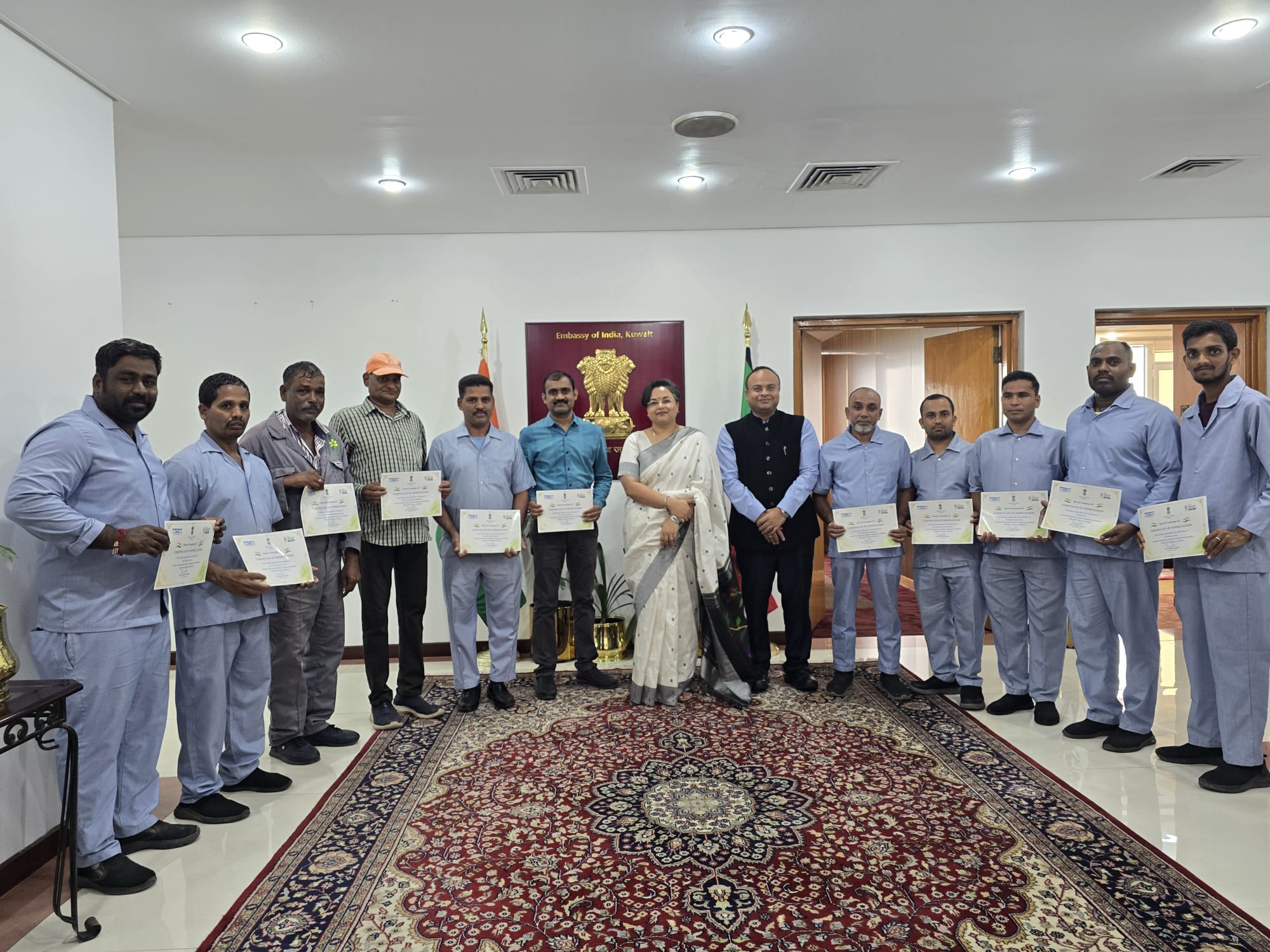
The Embassy of India in Kuwait observed Special Campaign 6.0 for Swachhata on 28 October 2026, as part of Government of India's nationwide campaign for cleanliness, disposal of pending matters and improved office management.

Swachhta C6 01

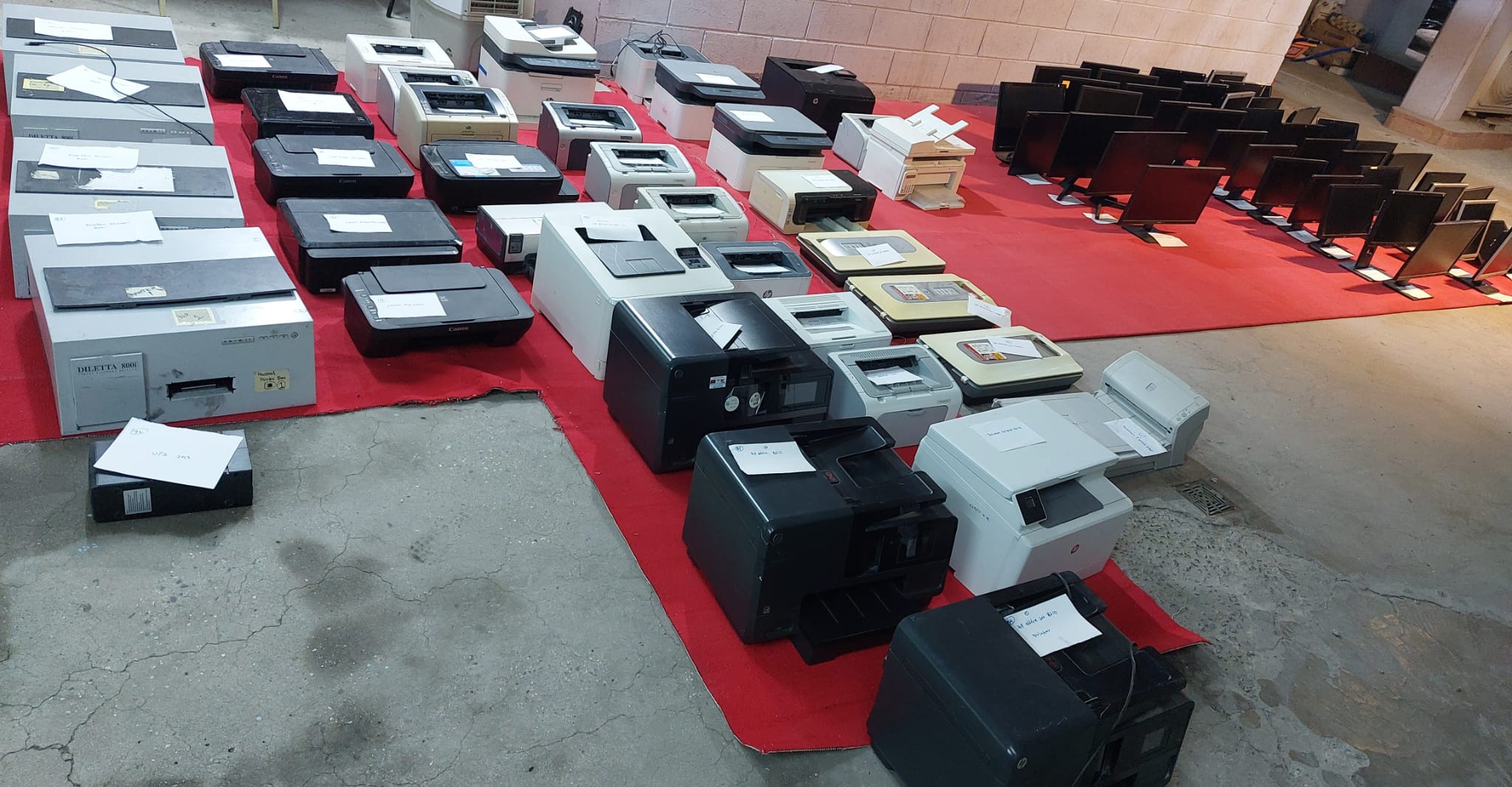
The Campaign aims to promote cleanliness in Government offices, improve workplace efficiency, ensure proper disposal of obsolete records and encourage environmentally responsible practices. This year's Campaign places special emphasis on the management and disposal of electronic waste (e-waste).

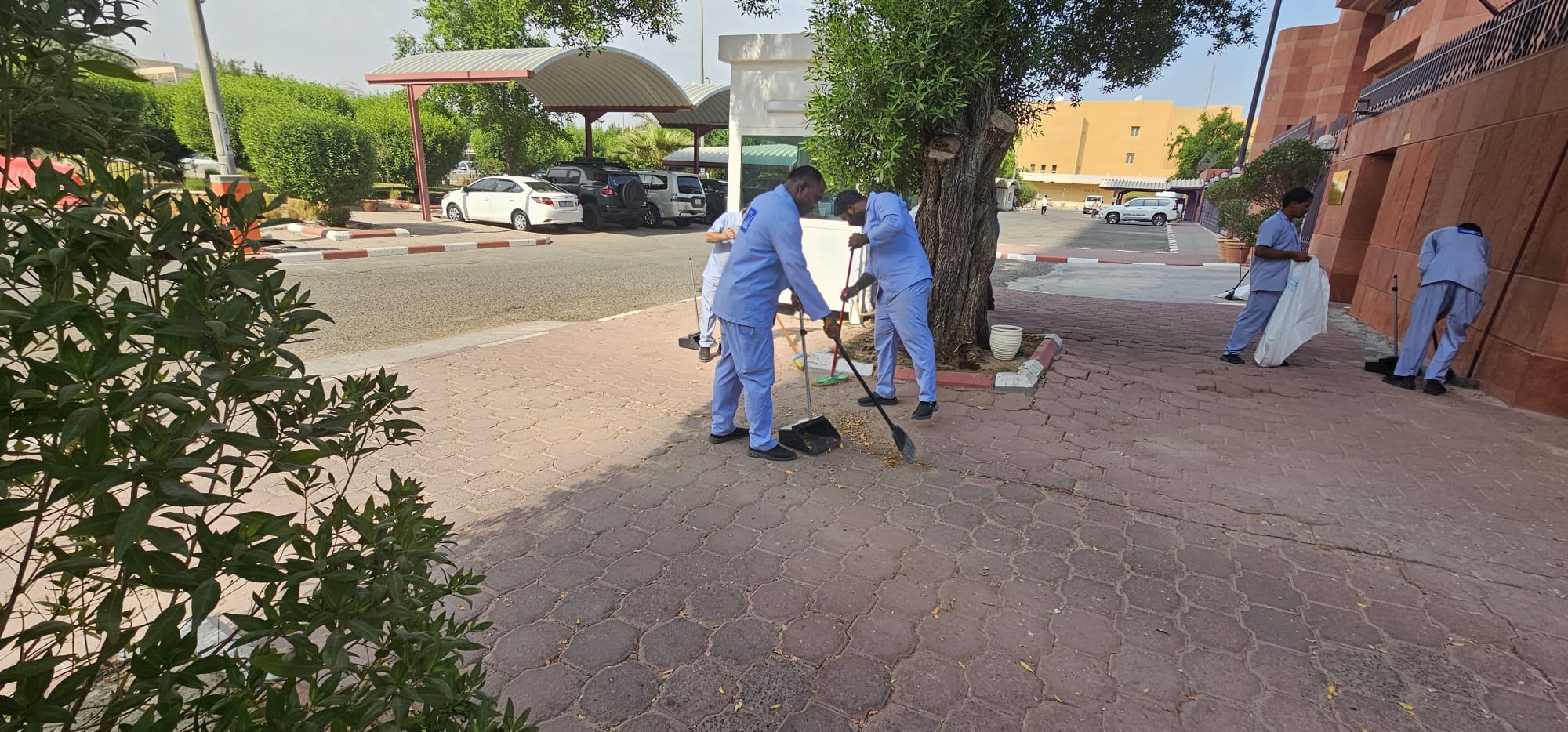
As part of the Campaign, the Embassy undertook activities focused on maintaining cleanliness and hygiene within its premises, promoting proper segregation and disposal of e-waste in an environmentally responsible manner.

The Embassy also recognized the valuable contribution of Safai Mitras (cleaning and sanitation workers) in maintaining cleanliness and hygiene within the Mission's premises. The initiative highlighted the importance of their dedicated efforts in ensuring a clean, healthy and well-maintained working environment.

The Embassy remains committed to promoting sustainable practices and efficient office management in line with the Government of India's ongoing efforts under Special Campaign 6.0.

For further information regarding the campaign, please contact the Embassy of India in Kuwait at admnkuwait@mea.gov.in

Kuwait
28 October 2026

**************

  Swachhta-C6-01.jpg Swachhta-C6-02.jpg Swachhta-C6-03.jpg Swachhta-C6-04.jpg Swachhta-C6-05.jpg

The Gulf tourism industry is at a turning point


For years, the Gulf’s tourism story seemed almost unstoppable. New hotels appeared almost overnight. Airports connected the region to virtually every corner of the world. Theme parks, museums, cultural districts and sporting venues transformed the visitor experience. Cities that were once primarily known as business or transit hubs began competing for tourists, families, events and international travellers.

The regional conflict disrupted flights, affected airspace, forced changes to travel plans and shook visitor confidence across the Gulf. Hotels felt the impact. Airlines had to adjust operations. Events were postponed or reconsidered. Travellers who had planned holidays months in advance suddenly found themselves asking a question that no tourism campaign can answer on its own:

The shock was a reminder that tourism is built on something more fragile than airports, hotels and attractions confidence. But it has also revealed something encouraging. The Gulf tourism industry is proving capable of adapting.

The recovery is already underway, and it is revealing a new tourism landscape in which resilience, diversification and the quality of the visitor experience may matter as much as the number of people arriving.

The scale of the Gulf’s tourism ambitions can be seen in the numbers. The six GCC countries welcomed more than 75 million inbound tourists in 2025, while tourism expenditure exceeded $131 billion. Intra-GCC tourism accounted for more than 20 million travellers, while tourism’s direct and indirect contribution to the regional economy reached around $254 billion, or 11.4 percent of combined GDP.

These are not simply tourism figures. Behind every visitor is a hotel room occupied, a restaurant table filled, a taxi journey made, a ticket purchased and a local business earning income. Tourism supports airlines, hotels, restaurants, retailers, transport companies, entertainment venues and thousands of jobs. That is why the disruption was felt far beyond the hotel sector. And that is also why the recovery matters so much. 

There is also a much bigger opportunity. The Gulf could increasingly be marketed as one interconnected tourism region. Imagine a visitor from India, Europe or China spending two weeks travelling through the GCC.

Three days in Kuwait. Four days in Saudi Arabia. Two days in Bahrain. Three days in Oman. Three days in the UAE. A sporting event in Qatar.

The visitor experiences different cultures, landscapes and lifestyles. The region gets a longer-staying visitor. Airlines, hotels, restaurants, retailers and attractions all benefit.

The GCC has already been moving towards stronger joint tourism promotion, intra-GCC travel, better data, digital transformation and coordinated recovery planning. The future could therefore be less about competition between Gulf destinations and more about complementarity.

But the Gulf has another problem: too many rooms?

The region is continuing to build hotels. Nearly 126,000 additional hotel rooms are expected to enter the GCC market by 2030, taking total supply to around 616,000 rooms.

That raises an uncomfortable question: Who will fill them? The answer cannot simply be more hotel rooms. The Gulf needs more reasons to travel. More festivals. More sporting events. More cultural programmes. More family attractions.

More business conferences. More regional tourism. More experiences that encourage visitors to stay for a week rather than a weekend. The future is not about counting arrivals alone. It is about value per visitor.

The traveller emerging from 2026 is likely to be more cautious. People have seen how quickly flights can be disrupted and how geopolitical developments can change travel plans. They want flexibility. Information, reassurance, They want to know what happens if their flight is cancelled. They want destinations that communicate quickly and honestly.

That means crisis communication is becoming part of the tourism product. So is safety, flexibility and increasingly, so is trust.

Despite the disruption, the fundamentals remain strong. The region has world-class airports and airlines, modern infrastructure, high-quality hotels, major investment capacity, sophisticated digital systems and rapidly expanding cultural and entertainment sectors.

What has changed is the understanding of what tourism resilience really means. It does not mean that disruption will never happen. It means that when disruption happens, the system can respond. Hotels can adapt. Airlines can restore connectivity. Governments can support businesses. Tourism authorities can rebuild confidence. Visitors can be reassured. And the industry can recover.

For years, Gulf destinations often competed for the same international visitors. That competition helped raise standards. But the next phase could be different. Joint tourism campaigns, Shared itineraries, Simpler visa arrangements, Cross-border packages, better regional transport and Coordinated crisis communication.

A unified tourism identity. These could turn the GCC into something more powerful than six successful tourism markets. It could become one of the world’s most diverse tourism regions.

The Gulf has survived the immediate tourism shock. The harder test is now beginning. Can destinations rebuild demand without depending heavily on discounts?

Can the region fill the enormous number of new hotel rooms coming onto the market? Can it persuade international travellers that the Gulf remains a safe and attractive destination? Can visitors be encouraged to stay longer? Can the GCC persuade travellers to experience several countries rather than just one?

And can Kuwait find its own distinctive place in that story? The answers may determine whether 2026 is remembered simply as the year Gulf tourism stumbled or the year it grew up.

The old Gulf tourism map was built around individual stars: Dubai, Abu Dhabi, Doha, Riyadh, Muscat, Manama and Kuwait City. The emerging map could look very different. It could look like a constellation. Each destination different. Each destination stronger because the others exist. The traveller may no longer ask: “Which Gulf country should I visit?”

For Kuwait, that represents an enormous opportunity. It does not have to become the Gulf’s biggest tourism destination. It simply has to become unmistakably Kuwait.

Because when people return home, they rarely remember the number of hotel rooms or the size of an investment. They remember the food , the people, the conversation, the unexpected discovery, the story they were told.

And perhaps that is where the Gulf’s next tourism revolution will begin.

  
****************************************************

Kuwait implements excise tax on tobacco, energy drinks, and sugary beverages


Kuwait has taken a step towards introducing excise taxation after the Cabinet approved a draft decree-law concerning the Unified Excise Tax Agreement of the Gulf Cooperation Council (GCC) countries and its amendment, referring the measure to His Highness the Amir Sheikh Meshal Al-Ahmad Al-Jaber Al-Sabah for approval.

The proposed framework is expected to cover four main categories of products: tobacco and its derivatives, energy drinks, carbonated beverages and sweetened drinks. The measure forms part of wider GCC efforts to harmonize indirect taxation, discourage the consumption of products considered harmful to health and diversify government revenue beyond oil.

According to reports on the proposed framework, the anticipated tax rates include 100 percent for tobacco products and energy drinks, while carbonated beverages could attract a 50 percent levy. Sweetened beverages are expected to be taxed according to their sugar content under the applicable GCC framework. The final rates and detailed provisions applicable in Kuwait remain subject to the completion of the legislative process and official announcements.

Four categories under the proposed tax

Tobacco and its derivatives: Tobacco products and related items are among the principal categories covered by the GCC excise tax framework. The proposed levy is intended to discourage tobacco consumption while generating additional public revenue.

Energy drinks: Energy drinks are another key category targeted by the proposed tax. GCC countries have adopted high excise rates for these products as part of efforts to influence consumption patterns and promote public health.

Carbonated beverages: Carbonated drinks are expected to fall within the scope of the tax, with a 50 percent rate cited under the proposed framework.

Sweetened beverages: Drinks containing added sugar or other sweeteners are also expected to be covered. Their tax treatment is linked to sugar content under the evolving GCC framework, although Kuwait’s final implementing provisions have yet to be announced.

The introduction of excise taxation could affect retail prices for products within the covered categories, depending on the final tax rates, how the tax is calculated and the extent to which businesses pass the additional cost on to consumers.

Importers, manufacturers and distributors are also likely to face new compliance requirements, including product classification, tax registration where applicable, record-keeping and reporting obligations under the eventual regulations.

Businesses handling taxable products may need to review their inventory, pricing structures and supply-chain arrangements ahead of implementation. The government is expected to provide further details on compliance procedures and any transitional arrangements as the process advances.

The GCC Unified Excise Tax Agreement establishes a common framework for applying and collecting excise taxes across member states. Its provisions seek to coordinate tax policies, facilitate the monitoring of taxable goods and strengthen economic integration across the region.

Kuwait’s Cabinet approval represents a significant procedural step towards adopting the framework. However, the approval of the draft decree-law should not be interpreted as confirmation that the tax has already taken effect.

As of October 28, 2026, an official implementation date for Kuwait has not been announced. Consumers and businesses will need to await the final legal provisions and subsequent guidance from the relevant authorities to determine when the tax will apply and how it will affect individual products.

The proposed measure is expected to provide Kuwait with an additional source of non-oil revenue while aligning its indirect taxation framework more closely with that of other GCC countries.

  
****************************************************

The Social Affairs Ministry imposes a dress code for employees and warns of legal ramifications


The Ministry of Social Affairs has introduced stricter dress code requirements for its employees, directing staff to wear attire that reflects the dignity of public service, respects national customs and traditions, and meets workplace safety requirements.

Acting Undersecretary of the Ministry of Social Affairs Faisal Al-Kandari has issued an administrative circular requiring employees to dress appropriately while on duty, maintain a neat and professional appearance, and observe standards of modesty and decorum consistent with Kuwait’s national identity and social values.

The circular prohibits sportswear, except for technical personnel working at outdoor sites, as well as short, transparent or otherwise inappropriate clothing. Torn garments and clothing featuring inappropriate images or phrases are also prohibited.

Employees are also required to use cosmetics and accessories in moderation and in a manner suitable for the workplace and prohibits displaying tattoos. Violations of the dress code could result in legal accountability, said the circular.

The requirements also emphasize occupational health and safety for employees working at technical sites, where clothing must be appropriate to the nature of the duties performed.

According to the circular, the rules are based on the Civil Service Law and its regulations, as well as the Civil Service Bureau’s circular on the Code of Conduct for Government Entities. The ministry said the requirements reflect public employees’ obligation to uphold the dignity of their positions and conduct themselves in a manner consistent with the respect their official roles demand.

  
****************************************************

Kuwait establishes medical responsibility service fees at 20 dinars, with appeals at 200 dinars


The Ministry of Health has introduced new fees for administrative and technical services provided by the Medical Liability Authority, with charges varying according to the type of request. Health care professionals and facilities will have to pay 20 dinars for each request relating to the authority’s specified administrative services.

The same fee applies to administrative services handled by the Health Licensing Department and requests for additional copies of technical committee reports. A higher fee of 200 dinars will apply to requests to form an appeals committee to review a technical committee’s report. In simple terms, this provides a formal route for seeking a review of a report through an appeals committee, subject to the applicable procedures.

The fee must be paid within 30 days of notification that the appeal has been accepted. Failure to pay within that period will render the appeal invalid. The new fees take effect on November 1, 2026, under Ministerial Decree No. 351 of 2026. The measure establishes clear charges for the authority’s services and sets a specific deadline for payment of appeals fees.

Minister of Health Dr. Ahmed Al-Awadhi issued Ministerial Decree No. 351 of 2026, which was published in the official gazette, Kuwait Alyawm. The decision establishes fees for administrative and technical services and sets out payment requirements for appeals related to technical committee reports.

Under the decree, a fee of 20 dinars will apply to each request for administrative services for health care professionals and facilities. The same fee will apply to administrative services related to the Health Licensing Department and requests for additional copies of technical committee reports.

Applications to form appeals committees to review technical committee reports will carry a fee of 200 dinars per request. The decree also establishes a deadline for paying appeal fees. Under Article Two, the prescribed fee must be paid within 30 days of notification that the appeal has been accepted. Failure to pay within that period will render the appeal null and void.

The new rules will take effect on November 1, 2026. Article Three directs the relevant authorities to implement the decision and provides for the repeal of any conflicting provisions. The decree was issued under Law No. 70 of 2020, which governs the practice of medicine and related professions, patients’ rights, and health care facilities.

It also follows Cabinet approval of the fees proposed by the Medical Liability Authority and the authority’s request concerning the payment period for appeals committee fees. The decision aims to standardize the administrative and technical procedures associated with the authority’s services, establish clear fees, and set a defined timeline for paying appeal fees.

  
****************************************************

Kuwait tightens its grip on wage infractions, as thousands of enterprises face action


For workers who rely on their monthly salaries to pay rent, meet household expenses and support families back home, going without wages for months can mean mounting debts and growing uncertainty. Kuwait is stepping up action against employers who fail to pay salaries, with First Deputy Prime Minister and Minister of Interior Sheikh Fahad Al-Yousef Al-Sabah warning that labour violations will no longer be tolerated and that the law will apply equally to all.

Authorities are examining the files of around 10,000 companies over unpaid wages. In some cases, workers reportedly went as long as 18 months without receiving their salaries. In response, the government is suspending company files, checking salary payments more closely and taking steps to hold employers accountable across the private sector.

Speaking at a meeting with company owners and representatives of the Public Authority for Manpower (PAM), Sheikh Fahad stressed that employers must fulfil their obligations to workers, regardless of nationality or the ownership of the business. He warned that companies found violating the rules could face the suspension of all related files and licences, rather than action being limited to the specific file in which the violation occurred.

The minister also raised concerns about questionable company arrangements, the misuse of commercial licences and suspected money laundering. Citing cases discussed during the meeting, he said 70 million dinars had circulated through three companies, one of which operated under a restaurant licence with only one registered employee. He also highlighted a case in which a Kuwaiti citizen was officially registered as earning 3,000 dinars a month but reportedly received only 180 dinars.

Such practices, he warned, could expose workers and citizens to exploitation while damaging Kuwait’s international standing and raising concerns over financial transparency.

  
****************************************************

Kuwait expats can now report lost passports via the Sahel app


Kuwait’s Ministry of Interior has launched a new electronic service allowing expatriates to report lost passports and obtain official loss certificates through the government’s unified Sahel application.

The service, titled “Certificate of Loss of Passport,” is available under the Security Services section of the Sahel app, enabling foreign residents to complete the procedure electronically without having to visit government offices.

According to the ministry, expatriates can use the service to report missing passports and obtain an official certificate to submit to the relevant authorities.

The initiative aims to simplify administrative procedures, reduce paperwork and improve access to government services for expatriate residents.

The Ministry of Interior announced the launch through its official Sahel account as part of ongoing efforts to expand digital services and streamline procedures for residents.

The new service forms part of Kuwait’s broader push to strengthen digital government services and enable residents to complete official transactions through a unified electronic platform.

  
****************************************************

PAM proposes greater action against corporations who defer workers' salaries


Companies that fail to pay their workers’ salaries regularly could be barred from government tenders and contracts under tougher enforcement measures being pursued by Kuwait’s Public Authority for Manpower (PAM), as authorities intensify efforts to protect rights of workers including payment of salaries on regular basis and strengthen compliance across the private sector.

According to a report published by Al-Jarida, PAM will submit the names of companies that fail to meet their monthly wage-payment obligations to the Central Agency for Public Tenders, paving the way for their exclusion from government bidding until they pay salaries of workers on regular basis

The move forms part of the drive by First Deputy Prime Minister and Minister of Interior Sheikh Fahd Al-Yousef to achieve “zero” violations involving salary transfers. Although authorities have reported progress in monitoring wage payments, the stated objective is to eliminate delays and ensure employers fulfil their obligations to workers every month.

Figures cited in the report show that companies submitted 93,865 applications through the Wage Collection System between January and September, representing an increase of 195.6 percent compared with 31,757 applications during the corresponding period a year earlier. The figures indicate a substantial increase in the use of the system, although the number of applications alone does not establish the overall rate of compliance.

Under the requirements outlined by the authority, private-sector companies must collect and transfer at least 90 percent of the total salaries of workers registered on their files each month, in addition to transferring and collecting the wages due to registered workers for the preceding month.

Companies that fail to satisfy these conditions face restrictions on a range of government services. These include the issuance of new work permits and authorizations, except renewals, the registration of government contracts, assessments of manpower requirements, the issuance of certificates needed by entities concerned with tenders, and the registration of company-owned vehicles.

The measures are intended to make timely wage payments a key condition for maintaining access to essential administrative services and participating in government business. Companies that fall short of the requirements will have to address their compliance deficiencies to restore their standing.

In a related development, PAM reviewed its electronic integration with the Wage Protection Platform at the Central Bank of Kuwait, a mechanism designed to improve oversight of salary transfers and strengthen the monitoring of employers’ compliance.

Under the system, employers upload wage files to their banks, which transmit the data through the Central Bank’s platform to PAM. The authority checks the information against the details of workers registered under the employer’s file before the payment process proceeds. Once the bank executes the transfers, the results are sent electronically to the authority.

The automated process is designed to verify wage data before disbursement, eliminate manual correspondence between banks and the authority, and enable faster detection of cases in which employers fail to comply with wage-payment requirements.

PAM is also compiling monthly compliance records to distinguish companies that consistently pay salaries on time from those that repeatedly delay payments. The authority is preparing a framework under which compliant companies could receive advantages based on their compliance levels.

The approach combines stricter enforcement against persistent violations with incentives for employers that maintain a reliable wage-payment record. It also gives companies an opportunity to complete their procedures and rectify shortcomings before their files are suspended.

With tender eligibility and access to key government services potentially at stake, the measures place greater emphasis on regular salary transfers as a fundamental responsibility of private-sector employers. PAM’s stated objective is to build on the progress achieved so far and eliminate wage-payment violations through continuous monitoring, electronic verification and stronger accountability.

  
****************************************************

Kuwait compels airlines and travel agents to divulge the airport fee codes


Kuwait’s General Authority of Civil Aviation (DGCA) has directed all airlines and travel and tourism agencies operating in Kuwait to clearly display fee codes for Kuwait International Airport and their corresponding amounts on travel tickets, according to an official statement issued by the authority.

DGCA official spokesperson Abdullah Al-Rajhi said Circular No. 58/2026, issued on October 19, 2026, aims to enhance transparency and ensure that travelers are fully informed of the applicable fees and their respective amounts.

Al-Rajhi clarified that the fees mentioned in the circular are not all new, as some have been applied for a previous period, while others were introduced recently. He explained that the circular seeks to standardize the disclosure of these fees and ensure that they are itemized on travel tickets, enabling passengers to understand the components of the costs they incur when booking flights.

The measure is part of the authority’s efforts to protect travelers’ rights and strengthen transparency in dealings between passengers, airlines, travel agencies and tourism companies.

Al-Rajhi added that providing detailed fee information will allow travelers to refer to the charges when necessary, including when cancelling bookings or requesting refunds for ticket values, subject to the terms and conditions applicable to the ticket and the regulations governing the transaction.

He stressed that all airlines and travel and tourism agencies operating in Kuwait must comply with the circular by displaying the relevant fee codes and their corresponding amounts clearly and separately. The requirement is intended to reduce confusion and improve the clarity of information provided to passengers.

Al-Rajhi reaffirmed that the DGCA will continue to carry out its regulatory and supervisory responsibilities to ensure clarity in travel-related procedures, safeguard travelers’ rights, and promote transparency and compliance with the regulations governing Kuwait’s aviation sector.

  
****************************************************

Not every cough is a virus; Kuwait doctors encourage autumn season health measures


Preventive health physician Dr. Abdullah Behbehani said seasonal weather fluctuations could irritate the respiratory system and worsen symptoms among children, older adults and people with chronic respiratory conditions. He advised patients to follow prescribed treatments, monitor their health and seek medical attention if symptoms become unusual or worsen.

Recommended precautions include avoiding direct exposure to dust, ensuring proper indoor ventilation, washing hands regularly, limiting contact with people who have respiratory illnesses and taking recommended vaccinations, particularly seasonal influenza and pneumonia vaccines for eligible groups. Dr Behbehani also warned against taking antibiotics or other medicines without medical advice, urging prompt evaluation in cases of breathing difficulties, persistent high fever or deteriorating health.

Internal medicine consultant Dr. Ghanem Al-Salem said seasonal changes were often accompanied by more cases of colds, influenza, nasal and sinus allergies, asthma symptoms and some intestinal infections. Temperature fluctuations, dust, humidity changes and increased contact in enclosed spaces could contribute to these health problems.

Al-Salem stressed that cold weather itself does not cause influenza, which requires transmission of the virus. Poor ventilation and crowded indoor environments can, however, facilitate the spread of respiratory infections, including the common cold, influenza, respiratory syncytial virus (RSV) and COVID-19.

He emphasised the importance of distinguishing between non-communicable conditions, such as allergies and asthma, and viral infections that can spread between people. Symptoms alone may not reliably identify the virus, and medical assessment or testing may be necessary.

Older adults, young children, pregnant women, people with diabetes or heart, lung and kidney diseases, and those with weakened immune systems face a greater risk of complications. Dr Al-Salem advised vulnerable patients to seek medical advice early when flu symptoms appear, noting that antiviral treatment is generally most effective when started within the first 48 hours, although later treatment may be considered in some severe cases.

Consultant in internal and infectious diseases Dr. Ghanem Al-Hujailan said respiratory infections could spread more readily during autumn as students returned to schools and people resumed close contact in crowded settings. Returning travellers may also introduce respiratory viruses that subsequently spread within the community.

Dr Al-Hujailan urged the public to follow health guidelines and stressed the importance of seasonal influenza vaccination, particularly for vulnerable groups and people who regularly interact with older adults or patients with chronic illnesses.

Dr Behbehani said attendance at health centres and preventive health centres remained within normal levels, with no unusual increase in visits linked to seasonal changes. He encouraged the public to maintain a healthy lifestyle through balanced nutrition, adequate sleep and regular physical activity, while seeking medical care for severe or persistent symptoms.

  
****************************************************

AI reshapes India's workplace; youthful workforce confronts new reality


Artificial intelligence is transforming India’s workplaces, helping employees complete tasks faster and improve productivity while raising important questions about employment, professional skills and the future of entry-level jobs.

From journalism and business management to law and software development, AI tools are increasingly being used to research information, translate content, analyse data, organise documents, prepare drafts and process large volumes of material. By automating repetitive tasks, the technology is allowing professionals to devote more time to analysis, problem-solving and decision-making.

However, its growing use also highlights the need for human oversight, as inaccurate information and errors can undermine the quality of the final output. The shift is particularly significant for young professionals entering the workforce. Tasks traditionally assigned to junior employees, including basic research, document preparation, data processing and initial drafting, can increasingly be performed with the assistance of AI, dw.com reports.

This is changing how companies organise teams, allocate responsibilities and assess the capabilities expected of new recruits. AI adoption among younger Indians is already widespread. A Deloitte survey cited in the source report found that 93 percent of Generation Z respondents and 95 percent of millennial respondents used AI in their day-to-day work

An Emeritus survey found that 82 percent of respondents aged 15 to 28 used AI tools at least weekly to learn or develop new skills. The findings point to the growing role of AI not only in professional tasks but also in learning and skills development. Employers are increasingly looking for workers who can use AI effectively while demonstrating critical thinking, sound judgement and the ability to verify information.

Rather than relying solely on technical knowledge or the ability to complete routine assignments, employees are expected to assess AI-generated results, identify errors, apply professional expertise and turn information into practical solutions. This transition is also influencing recruitment and workforce planning.

AI can allow smaller teams to handle workloads that previously required more employees, particularly in areas involving routine writing, research, data analysis and administrative support. While this can improve efficiency, it may also reduce demand for some traditional junior-level tasks and make it more difficult for newcomers to gain experience through work that was once an important entry point into a profession.

A 2025 report by NITI Aayog, citing data from the Center of Advanced Study in India, said more than 60 percent of formal-sector jobs could be susceptible to automation by 2030, particularly in information technology and business-process services. The report also warned of slower hiring for entry-level software engineers and identified junior quality-assurance and Level 1 support roles as vulnerable.

The implications extend beyond the technology industry. In journalism, AI can accelerate research and translation, but it cannot remove the need for accurate reporting and verification. In law, it can help organise case documents and prepare preliminary drafts, while legal analysis and responsibility for the work remain critical. In business, AI can streamline data processing and presentations, but its conclusions still require scrutiny and an understanding of the commercial context.

India’s technology sector is also integrating AI more deeply into its operations. Tata Consultancy Services said in its 2025-26 annual report that it had expanded its “Human+AI” operating model and was embedding AI across services and software development. In software engineering, the growing use of AI-generated code is shifting part of the workload towards testing.

  
****************************************************

Kuwait aims to include the Chinese language into school curricula


The Ministry of Education is coordinating with the Ministry of Foreign Affairs on the proposed initiative, which aims to broaden students’ exposure to foreign languages and international educational experiences, according to a report published by Al-Rai on October 19.

Under the proposal, Chinese would be offered as an optional subject within the curriculum and incorporated into a dedicated foreign-language track under the new secondary school system, giving students greater choice in their studies.

The proposed cooperation also includes incorporating information about the history and geography of Kuwait and China into educational curricula. The initiative is intended to strengthen students’ understanding of the two countries’ historical, geographical and cultural backgrounds while promoting knowledge exchange.

The move reflects efforts to expand educational engagement between Kuwait and China while equipping students with additional language skills relevant to an increasingly interconnected world.

  
****************************************************